






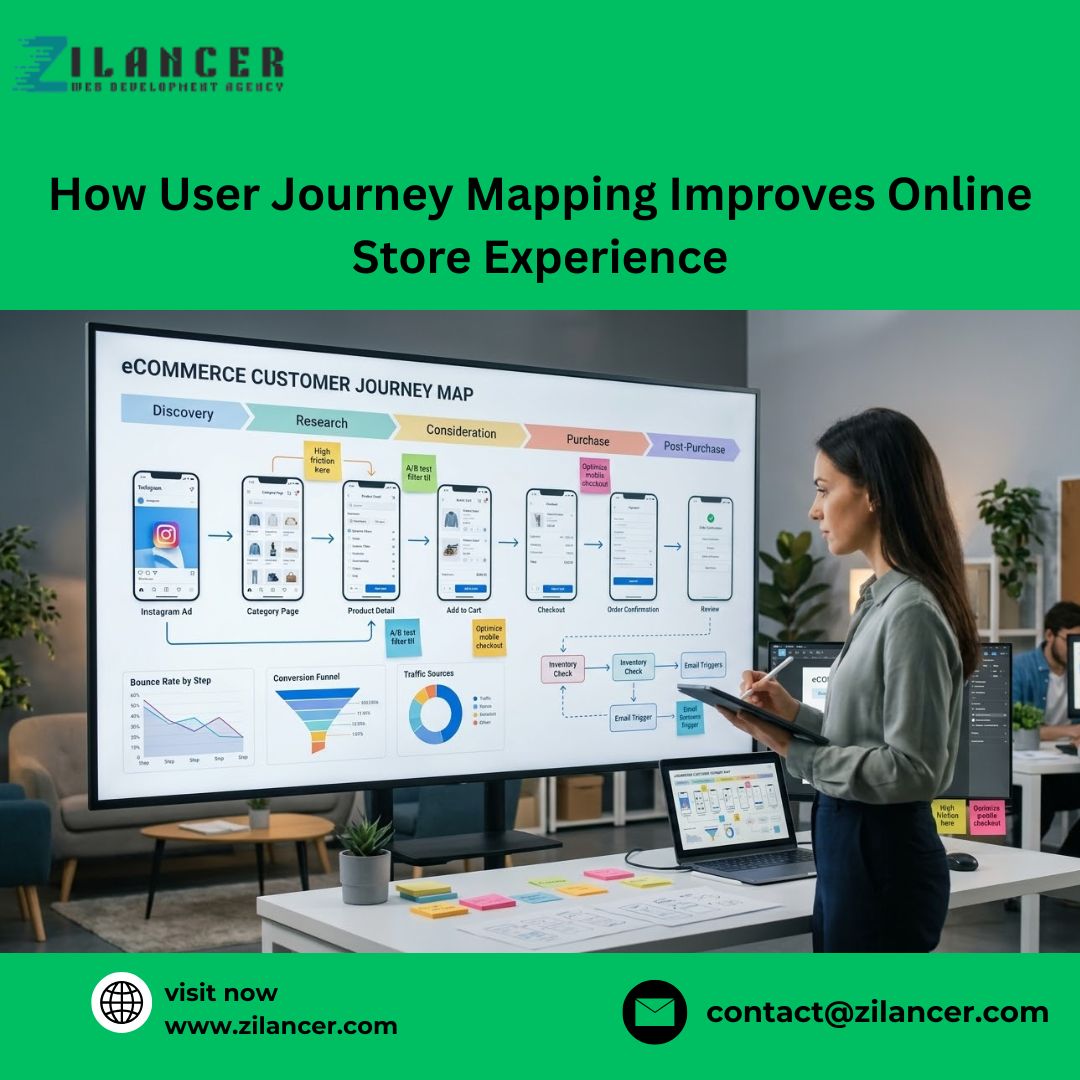
In the world of e-commerce, creating a successful online store requires more than attractive design and high-quality products. What truly determines whether visitors become customers is the experience they have while navigating your store. Every click, page view, and interaction contributes to how users perceive your brand and whether they decide to complete a purchase.
Many businesses focus only on individual elements such as product pages or website design, but the real key to improving customer experience lies in understanding the entire journey a user takes from the moment they discover your store to the moment they complete a purchase and beyond.
This is where User Journey Mapping becomes an essential strategy. It helps businesses visualize and analyze the complete path customers follow while interacting with an online store. By studying this journey, companies can identify obstacles, optimize navigation, and create a smoother and more engaging shopping experience.
For businesses running stores on platforms like Shopify, understanding the customer journey can significantly improve usability, customer satisfaction, and conversion rates.
At Zilancer, we use user journey mapping as a core part of our UX strategy to design eCommerce experiences that guide customers naturally toward conversion while ensuring a seamless and enjoyable shopping process.
What is User Journey Mapping?
User journey mapping is the process of visualizing and analyzing the steps customers take when interacting with a website or online store. It helps businesses understand how users discover their store, explore products, make purchasing decisions, and interact with the brand after completing a transaction.
A typical eCommerce user journey includes several key stages:
Discovery – Customers first learn about your brand through search engines, social media, ads, or referrals.
Exploration – Visitors browse the homepage, product categories, and featured collections to learn more about the store.
Product Evaluation – Customers compare products, read descriptions, check reviews, and analyze prices.
Cart Interaction – Users add items to the cart and review their selections before proceeding to checkout.
Checkout Process – Customers enter payment and shipping details to complete their purchase.
Post-Purchase Engagement – After the purchase, customers may receive emails, track orders, or return for future purchases.
By mapping each of these stages, businesses can clearly see where customers succeed and where they face difficulties during their journey.
Identifies Customer Pain Points
One of the most important benefits of user journey mapping is the ability to uncover friction points that negatively affect the shopping experience.
These issues may include:
-
Confusing navigation structures
-
Slow page loading speeds
-
Unclear product descriptions
-
Poor mobile usability
-
Complicated checkout forms
Without journey mapping, these problems often remain hidden because businesses only look at isolated metrics rather than the full user experience.
By analyzing the complete journey, companies can identify exactly where users drop off or become frustrated. Fixing these issues significantly improves customer satisfaction and encourages users to continue through the purchasing process.
Improves Website Navigation
Navigation plays a major role in determining whether users can easily find what they are looking for. If customers struggle to locate products or important information, they are likely to leave the website quickly.
User journey mapping helps businesses understand how visitors explore their online store. By analyzing browsing patterns, designers can structure menus, product categories, and search features in a way that feels intuitive.
Clear navigation reduces confusion and helps customers reach the right products faster. This creates a smoother shopping experience and encourages users to spend more time exploring the store.
Enhances Product Discovery
Another important advantage of journey mapping is improving how customers discover products within the store.
Many visitors enter an online store without knowing exactly what they want. They may start by browsing categories, exploring recommendations, or using search filters to narrow down their options.
User journey insights help businesses strategically place product recommendations, featured collections, and related product sections throughout the shopping experience. This makes it easier for customers to discover additional products that match their interests.
Better product discovery not only improves the shopping experience but also increases the chances of higher order values.
Optimizes the Checkout Experience
The checkout stage is one of the most critical points in the entire user journey. Unfortunately, many online stores lose potential customers during this stage due to complex forms, unexpected costs, or too many steps in the process.
User journey mapping helps identify where customers abandon their carts and what causes hesitation during checkout.
By simplifying forms, reducing unnecessary steps, and making payment options clear, businesses can create a faster and more user-friendly checkout experience. A smooth checkout process significantly reduces cart abandonment and increases completed purchases.
Supports Personalized Experiences
Modern customers expect personalized experiences when interacting with online brands. They want relevant product suggestions, targeted offers, and content that matches their interests.
User journey mapping provides valuable insights into customer behavior, preferences, and decision-making patterns. Businesses can use this information to create personalized experiences, such as:
-
Product recommendations based on browsing history
-
Targeted promotions for specific customer segments
-
Personalized email campaigns after browsing or purchasing
-
Customized landing pages for returning customers
These personalized experiences make customers feel understood and valued, which strengthens brand relationships and increases loyalty.
Increases Conversion Rates
When every stage of the customer journey is carefully optimized, the entire shopping experience becomes smoother and more enjoyable.
Visitors can easily discover products, navigate the store, compare options, and complete their purchases without frustration. This seamless experience naturally encourages more customers to follow through with their buying decisions.
As a result, businesses see improvements in key performance metrics such as:
-
Higher conversion rates
-
Lower bounce rates
-
Increased average order value
-
Greater customer satisfaction
Optimizing the user journey transforms casual visitors into loyal customers.
Conclusion
User journey mapping is a powerful strategy for improving the overall experience of an online store. By analyzing how customers interact with each stage of the shopping process, businesses can identify obstacles, improve usability, and design a more seamless path to purchase.
From improving navigation and product discovery to simplifying checkout and enabling personalized experiences, journey mapping helps businesses remove friction and create more satisfying customer interactions.
For e-commerce businesses operating on platforms like Shopify, understanding the customer journey is essential for maximizing performance and achieving sustainable growth.
At Zilancer, we specialize in creating customer-focused eCommerce experiences through UX research, user journey mapping, and conversion-driven design strategies. Our goal is to help businesses build online stores that not only look great but also deliver exceptional user experiences that drive real results.