






Why Speed Optimization Matters for Shopify Stores (And How to Fix It)
In modern eCommerce, speed is no longer a technical detail hidden behind the scenes—it is a direct business driver. Customers expect online stores to load instantly, and when a Shopify store feels slow, visitors rarely wait. Even a one-second delay can cause users to abandon the site, resulting in lost sales and wasted marketing spend. For businesses running on Shopify, speed optimization is critical to user experience, conversion rates, and long-term scalability.
At Zilancer, we often audit Shopify stores with great products, strong branding, and active ad campaigns that still struggle with performance. In most cases, speed is the hidden issue holding growth back. Optimizing speed is not just about technical improvements—it is about creating a smooth buying experience that encourages users to trust the brand and complete their purchase.
The Relationship Between Speed and User Behavior
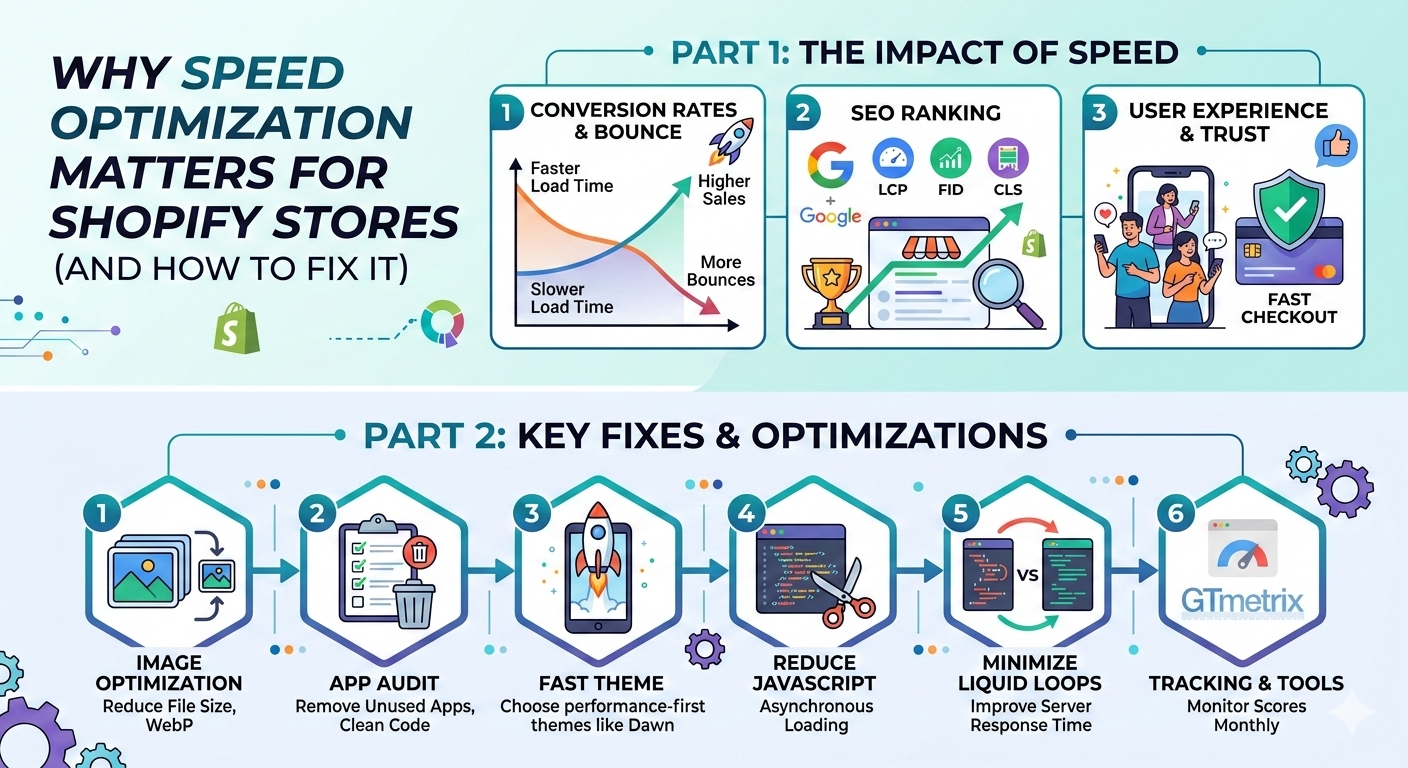
Website speed directly shapes how users perceive your store. When pages load quickly, visitors feel in control and confident navigating the site. They are more likely to explore product pages, read descriptions, and move naturally toward checkout. A fast store feels professional, reliable, and trustworthy.
On the other hand, a slow Shopify store creates friction at every step. Delays in loading images, collections, or checkout pages frustrate users and interrupt their buying journey. Most visitors will leave without giving the store a second chance. Over time, this behavior increases bounce rates and reduces overall engagement, making it harder for the store to grow.
How Speed Directly Impacts Conversions and Revenue
Speed optimization has a measurable impact on conversion rates. When users can browse products and complete purchases without interruptions, they are more likely to buy. Faster load times reduce hesitation and create momentum throughout the shopping journey.
For paid traffic, speed becomes even more important. Businesses may spend heavily on ads to bring visitors to their Shopify store, but if the site is slow, those visitors leave before converting. This increases cost per acquisition and lowers return on ad spend. A fast store ensures that marketing efforts translate into real revenue instead of wasted clicks.
Speed as a Key Factor in SEO Performance
Search engines prioritize websites that deliver strong user experiences, and speed is a major ranking factor. Google favors fast-loading stores because they keep users engaged and satisfied. A slow Shopify store struggles to rank, even with high-quality content and optimized keywords.
Improving site speed helps search engines crawl and index pages more efficiently. It also reduces bounce rates and improves dwell time—both of which signal quality to search engines. Over time, this leads to better rankings, increased organic traffic, and more consistent sales without relying solely on paid ads.
Common Causes of Slow Shopify Stores
Many Shopify stores become slow due to decisions made during setup and growth. Large uncompressed images, excessive third-party apps, heavy themes, and unoptimized scripts gradually reduce performance. These issues often go unnoticed until traffic increases or conversion rates start dropping.
Customizations added without performance testing can also slow down stores. While features may add functionality, they often introduce unnecessary code that impacts loading speed, especially on mobile devices.
How Zilancer Fixes Shopify Speed Issues
Speed optimization requires a strategic and balanced approach. At Zilancer, we focus on improving performance without compromising design or functionality. Our process includes auditing themes, optimizing images and assets, removing unnecessary apps, and improving code efficiency.
We also prioritize mobile speed, ensuring that Shopify stores load quickly across all devices. The result is a faster, smoother store that delivers better user experience, higher conversions, and stronger SEO performance.
Speed Optimization as a Long-Term Growth Foundation
Speed optimization is not a one-time task. As stores grow, add products, and integrate new tools, performance must be monitored continuously. A fast Shopify store provides a solid foundation for scaling traffic, running ads efficiently, and expanding into new markets.
For brands serious about growth, speed is not optional—it is essential.