






Choosing the right eCommerce platform is one of the most important decisions for any online business. Two of the most popular options today are Shopify and WooCommerce. Both platforms have their strengths, but they cater to different business needs. Understanding the differences can help you decide which platform is best for your online store.
Ease of Use and Setup
Shopify:
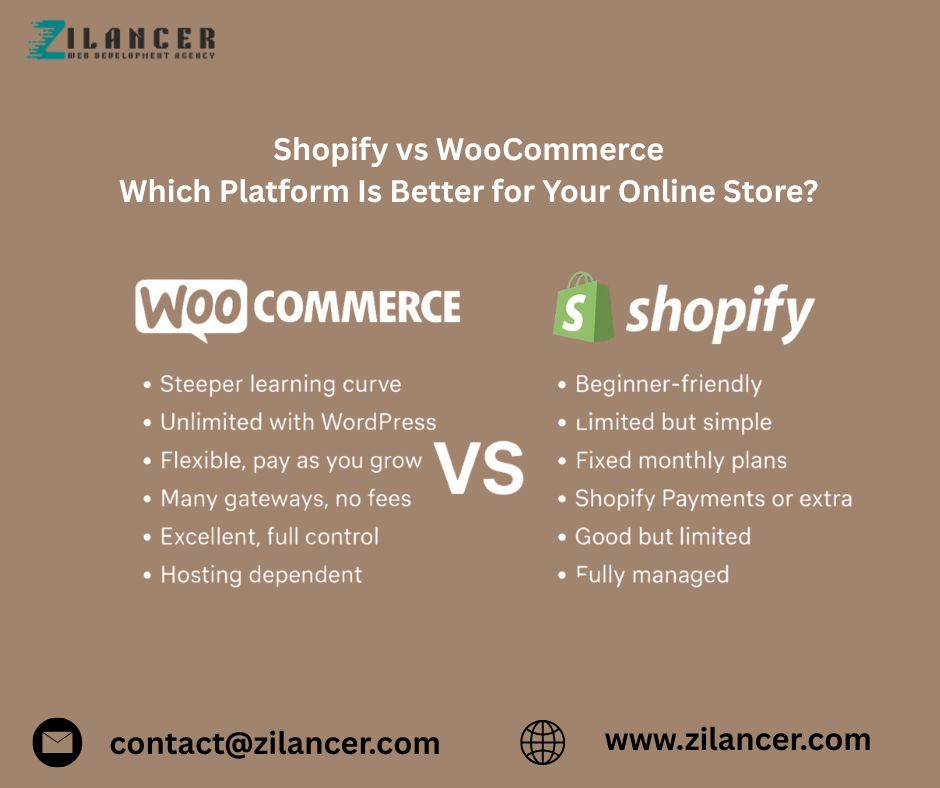
Shopify is a fully hosted, all-in-one platform designed for simplicity and speed. Setting up a store is straightforward, with no technical knowledge required. Store owners can choose from pre-designed themes, configure payment gateways, and launch quickly. Shopify handles hosting, security, and updates automatically, making it ideal for businesses that want to focus on sales rather than technical maintenance.
WooCommerce:
WooCommerce is a plugin for WordPress, which means it requires a self-hosted website. While it offers high flexibility, it demands more technical knowledge. Users need to manage hosting, security, and updates themselves, which can be challenging for beginners. WooCommerce setup is more time-consuming but offers complete control over every aspect of the store.
Winner: Shopify for beginners and fast setup; WooCommerce for those comfortable with WordPress and customizations.
Design and Customization
Shopify:
Shopify provides a wide range of professional themes that are mobile-responsive and optimized for e-commerce. Themes are easy to customize using a drag-and-drop editor, and additional customizations are possible through Shopify’s Liquid coding language. While flexibility is good, there are some limits compared to fully open-source platforms.
WooCommerce:
WooCommerce offers unlimited customization options because it’s open-source. With WordPress themes, page builders, and plugins, you can design your store exactly the way you want. This makes WooCommerce ideal for businesses with unique design requirements or complex functionality.
Winner: WooCommerce for ultimate customization, Shopify for simplicity and speed.
Scalability and Performance
Shopify:
Shopify is built for scalability. It can handle high volumes of traffic and transactions without requiring technical intervention. Shopify Plus, the enterprise-level plan, provides advanced features for large businesses and high-growth stores. Hosting, security, and server performance are fully managed by Shopify, allowing businesses to focus on growth.
WooCommerce:
WooCommerce can scale, but performance depends heavily on hosting, server resources, and plugin management. High-traffic stores may require dedicated hosting or optimization services. Scaling WooCommerce requires technical expertise and ongoing management.
Winner: Shopify for hassle-free scalability; WooCommerce can scale but requires technical management.
Pricing Structure
Shopify:
Shopify charges a monthly subscription fee, which includes hosting, security, and updates. The cost varies depending on the plan (Basic Shopify, Shopify, or Shopify Plus). There are additional fees for premium themes or paid apps, and a small transaction fee if you don’t use Shopify Payments.
WooCommerce:
WooCommerce itself is free, but you need to pay for hosting, SSL certificates, themes, and any premium plugins. While it can be cheaper initially, costs can add up as you scale your store or add functionality.
Winner: Depends on business size—Shopify is predictable and all-in-one, WooCommerce can be cheaper but with variable costs.
Security and Maintenance
Shopify:
Shopify is fully hosted and PCI compliant, meaning it automatically handles security updates, SSL certificates, and server monitoring. This reduces the risk of hacks and ensures your store is secure without additional effort.
WooCommerce:
WooCommerce requires you to manage security yourself, including SSL, updates, and regular backups. This gives flexibility but adds responsibility. Businesses without technical support may struggle to maintain proper security.
Winner: Shopify for ease of security; WooCommerce for those who can manage it themselves.
App and Plugin Ecosystem
Shopify:
Shopify has a large app store with thousands of plugins for marketing, SEO, shipping, inventory, and more. Apps are easy to install and integrate seamlessly with your store.
WooCommerce:
WooCommerce benefits from WordPress’s vast plugin ecosystem. Practically any functionality you can imagine is possible, but some plugins may conflict or require technical adjustments.
Winner: Tie—Shopify offers convenience, WooCommerce offers unlimited possibilities.
SEO and Content Marketing
Shopify:
Shopify offers strong SEO capabilities, including editable meta tags, clean URLs, and blogging functionality. It’s optimized for speed and mobile performance, which helps search rankings.
WooCommerce:
WooCommerce, combined with WordPress, is highly flexible for SEO and content marketing. You can use plugins like Yoast SEO or Rank Math to optimize every aspect of your site. This makes WooCommerce the better choice for content-driven strategies.
Winner: WooCommerce for advanced SEO control; Shopify for built-in SEO convenience.
Final Verdict
Choosing between Shopify and WooCommerce depends on your business needs:
-
Choose Shopify if you want a fast, reliable, and easy-to-manage store with minimal technical hassle. Ideal for startups, small to medium businesses, or anyone looking for a managed solution that scales.
-
Choose WooCommerce if you want complete control and flexibility, are comfortable with WordPress, and want to customize every aspect of your store. Best for businesses with unique requirements or content-driven strategies.
At Zilancer, we help businesses launch and optimize both Shopify and WooCommerce stores. From store setup and custom theme design to performance optimization and marketing integration, we ensure your eCommerce platform works efficiently to maximize growth and sales.