



When starting or scaling a Shopify store, one of the most important decisions you’ll face is whether to use a prebuilt theme or invest in custom Shopify development. At first glance, prebuilt themes may seem like the easiest and fastest option. They are affordable, ready to use, and require minimal setup. On the other hand, custom development offers complete control, flexibility, and a unique brand experience—but it requires more time and investment. The choice you make here will directly impact your store’s performance, scalability, and long-term success.
At Zilancer, we help businesses make the right decision based on their goals, budget, and growth plans—because the right foundation can determine how far your Shopify store can go.
Understanding Prebuilt Shopify Themes
Understanding prebuilt Shopify themes is essential for anyone who wants to launch an online store quickly without sacrificing professionalism. These themes are ready-made design templates available on Shopify that allow you to build a complete storefront without starting from scratch. Instead of coding everything manually, you can use a structured layout and customize it to match your brand. One of the biggest advantages of prebuilt themes is speed. You can set up your store in a short time by simply adding your products, updating images, and adjusting colors and fonts. This makes them ideal for startups or businesses that want to enter the market fast without heavy development costs. Prebuilt themes are also designed with user experience in mind. They come with tested layouts that guide visitors through the shopping journey—from landing on the homepage to browsing products and completing a purchase. Most themes are mobile-responsive, ensuring your store works smoothly across smartphones, tablets, and desktops.
Another important benefit is built-in functionality. Many Shopify themes include features like product filtering, promotional banners, image galleries, and quick add-to-cart options. These elements are already optimized, which helps improve usability and saves time on additional setup. However, prebuilt themes do come with some limitations. Since they are created for a wide range of users, customization can be restricted. If your business requires a unique design or advanced features, you may find it difficult to achieve that with a standard theme alone. In such cases, custom development or a headless approach might be more suitable. Performance is another factor to consider. Some themes include extra features that you may not need, which can slow down your store. Choosing a lightweight, well-coded theme is important to maintain speed and efficiency. In summary, prebuilt Shopify themes offer a practical and cost-effective way to launch a professional store. When chosen carefully and optimized properly, they provide a strong foundation for growth while allowing you to focus on marketing, sales, and scaling your business.
Benefits of Prebuilt Themes
Prebuilt themes offer a practical and efficient way to launch a professional online store, especially on platforms like Shopify. Instead of building a design from scratch, these ready-made templates provide a solid foundation that helps businesses go live faster while maintaining a polished and user-friendly appearance. One of the biggest benefits of prebuilt themes is speed of launch. You can quickly set up your store by customizing an existing layout, adding your products, and updating branding elements like colors and fonts. This is ideal for startups or businesses that want to enter the market without long development timelines.
Cost-effectiveness is another major advantage. Custom design and development can be expensive, especially for small businesses. Prebuilt themes significantly reduce upfront costs while still delivering a professional look and essential functionality. This allows you to invest more in marketing and growth rather than spending heavily on design. Prebuilt themes are also designed with proven user experience in mind. These templates are typically built based on industry best practices, ensuring that navigation, layout, and structure are optimized for conversions. This means your store is already set up to guide visitors toward making a purchase. Mobile responsiveness is another key benefit. Most modern prebuilt themes are fully optimized for mobile devices, ensuring that your store looks and functions well on smartphones and tablets. This is critical, as a large portion of online shopping now happens on mobile. Additionally, prebuilt themes often come with built-in features such as product galleries, filtering options, promotional sections, and basic SEO settings. These features save time and reduce the need for extra apps or custom coding. However, while prebuilt themes are powerful, they may have some limitations in terms of deep customization. As your business grows, you might need more flexibility to create unique experiences. Overall, prebuilt themes provide a fast, affordable, and reliable way to launch an eCommerce store. When chosen carefully and optimized properly, they can deliver strong performance, good user experience, and a solid foundation for scaling your business.
Limitations of Prebuilt Themes
While prebuilt themes offer speed and convenience, they also come with several limitations that businesses should carefully consider—especially when using platforms like Shopify. Relying entirely on a prebuilt theme can restrict your ability to fully customize and optimize your store as your business grows. One of the main limitations is restricted customization. Prebuilt themes are designed for a wide audience, which means their structure and features are somewhat fixed. While you can change colors, fonts, and basic layouts, making deeper design or functionality changes often requires custom coding or developer support. This can become a barrier if you want a unique brand experience that stands out from competitors. Another challenge is performance. Many prebuilt themes come with built-in features that may not be necessary for your specific store. These extra elements can add unnecessary code, increasing page load time and negatively affecting user experience and SEO. A slower store can lead to higher bounce rates and lower conversions.
Design limitations can also impact branding. Since prebuilt themes are widely available, other stores may use the same or similar designs. This makes it harder to create a distinct visual identity, which is important for building brand recognition and trust. Compatibility with apps and integrations can sometimes be an issue as well. Not all themes work seamlessly with every app, and conflicts can arise that affect functionality or performance. Fixing these issues may require technical expertise. Scalability is another concern. As your business grows and your needs become more advanced, a prebuilt theme may no longer support the level of customization, speed, or flexibility required. At that point, you may need to invest in a custom or headless solution, which can involve additional time and cost. In summary, while prebuilt themes are great for quick launches and cost savings, they can limit flexibility, performance, and uniqueness in the long run. Understanding these limitations helps you make better decisions and plan for future growth without unexpected challenges.
Benefits of Custom Shopify Development
Custom Shopify development offers a powerful advantage for businesses that want to go beyond standard templates and build a store tailored specifically to their brand and goals. While prebuilt solutions provide a quick start, a custom approach on Shopify allows you to create a unique, high-performing eCommerce experience that stands out in a competitive market. One of the biggest benefits is complete design flexibility. With custom development, you are not limited by prebuilt theme structures. Every element—from layout and navigation to product pages and checkout flow—can be designed to match your brand identity and optimize user experience. This helps create a distinctive store that leaves a lasting impression on customers. Performance optimization is another key advantage. Custom-built stores can be developed with clean, lightweight code, ensuring faster loading speeds and smoother interactions. Unlike many prebuilt themes that include unnecessary features, custom development focuses only on what your business actually needs, resulting in better speed, improved SEO, and higher conversion rates. Custom Shopify development also allows for advanced functionality. Whether you need unique product configurations, custom integrations, or specialized features, everything can be built to fit your specific requirements. This level of flexibility is essential for businesses with complex operations or innovative ideas that cannot be supported by standard solutions.
Scalability is another major benefit. As your business grows, your store can evolve with it. Custom development makes it easier to add new features, expand into new markets, or integrate advanced tools without being restricted by theme limitations. This ensures your store remains future-ready and adaptable. Additionally, a custom-built store can provide a better user journey. By analyzing customer behavior and designing around it, you can create a seamless shopping experience that reduces friction and encourages conversions. Every step—from landing on the homepage to completing checkout—can be optimized for maximum efficiency. In the long run, custom Shopify development is an investment in performance, flexibility, and brand identity. It allows you to build not just a store, but a fully optimized eCommerce platform that supports growth, improves customer experience, and drives higher revenue.
Challenges of Custom Development
While custom development offers flexibility and performance advantages, it also comes with several challenges that businesses need to consider before choosing this path—especially when working on platforms like Shopify. Jumping into custom development without proper planning can lead to higher costs, longer timelines, and ongoing complexity. One of the biggest challenges is cost. Custom development requires skilled designers and developers, which makes it significantly more expensive than using prebuilt themes. From initial design and development to testing and deployment, the investment can be substantial—especially for small or growing businesses. Time is another major factor. Unlike prebuilt solutions that can be launched quickly, custom development takes time to design, build, and refine. If you need to launch your store, a fully custom approach may delay your entry into the market and slow down early growth opportunities.
Technical complexity is also a key challenge. Custom stores require ongoing maintenance, updates, and troubleshooting. Without a reliable development team, managing these technical aspects can become overwhelming. Even small changes may require developer involvement, which adds to long-term dependency and cost. Another issue is scalability management. While custom development allows scalability, it also requires careful planning to ensure your store can handle increased traffic, new features, and integrations without performance issues. Poorly structured custom code can create problems as your business grows. Compatibility and integration challenges may also arise. Custom-built features need to work seamlessly with third-party apps, payment gateways, and marketing tools. Ensuring everything integrates properly can be complex and may require additional development work. Finally, there is a risk of overbuilding. Many businesses invest in advanced custom features that they don’t immediately need. This not only increases cost but can also complicate the user experience if not implemented strategically. In summary, while custom development provides control and flexibility, it demands more time, money, and technical expertise. Businesses should carefully evaluate their needs, resources, and growth stage to determine whether the benefits outweigh the challenges.
Key Differences Between Custom Development and Prebuilt Themes
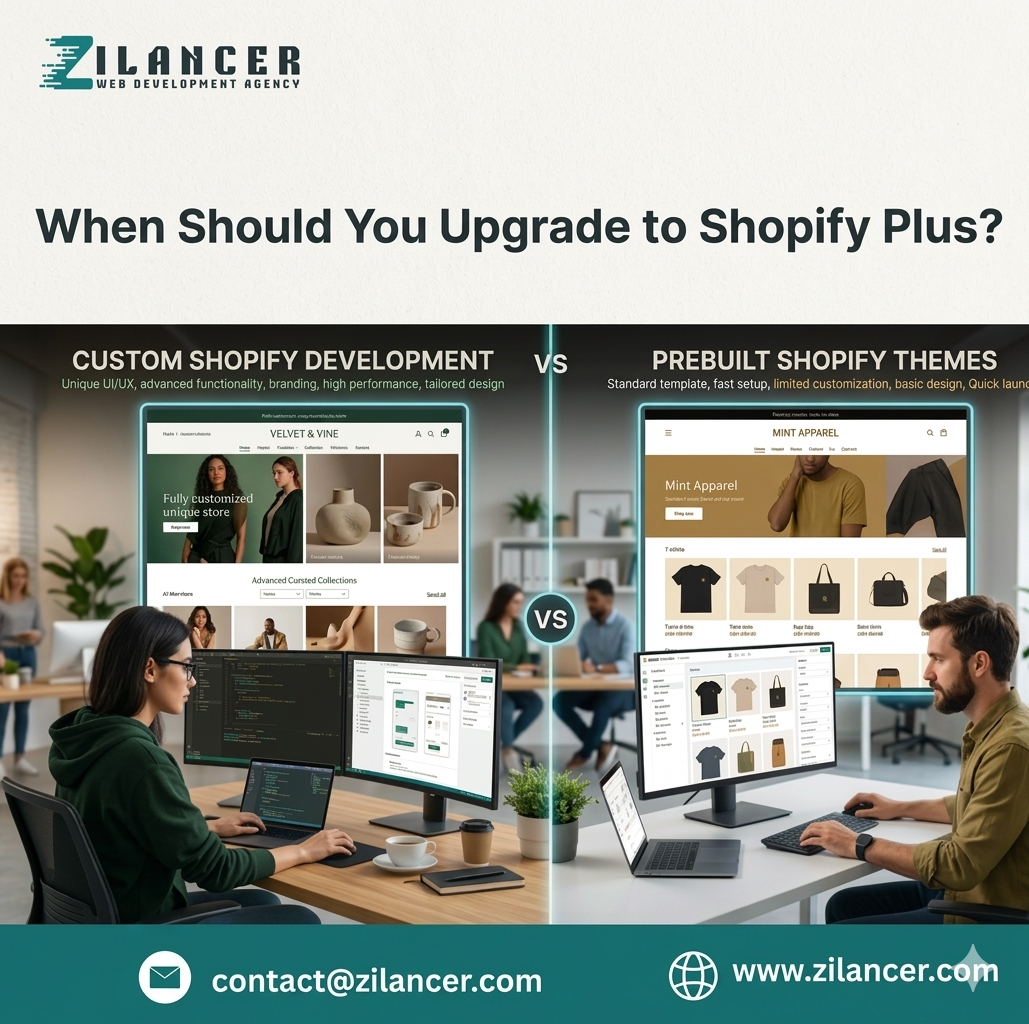
Understanding the key differences between custom development and prebuilt themes is essential when deciding how to build your online store on Shopify. Both approaches have their advantages, but they serve different business needs depending on your goals, budget, and stage of growth. The most noticeable difference is flexibility. Custom development gives you complete control over design and functionality. You can build every element from scratch to match your brand and create a unique user experience. In contrast, prebuilt themes come with fixed structures and limited customization options. While you can adjust styles and content, deeper changes often require additional coding. Another major difference is speed of launch. Prebuilt themes allow you to set up your store quickly since the design and layout are already created. This makes them ideal for businesses that want to go live fast. Custom development, on the other hand, takes more time because everything needs to be designed, developed, and tested before launch.
Cost is also a significant factor. Prebuilt themes are more affordable and require less upfront investment, making them suitable for startups or small businesses. Custom development is more expensive due to the need for professional designers and developers, but it offers long-term value for businesses that need advanced features and scalability. Performance and optimization can vary between the two. Custom-built stores are often more optimized because they include only the features you need, resulting in faster loading speeds. Prebuilt themes may include extra code or unused features that can impact performance if not properly optimized. Scalability is another key difference. Custom development allows your store to grow without major limitations, making it easier to add new features and integrations as your business expands. Prebuilt themes may eventually become restrictive as your needs become more complex. Finally, uniqueness and branding play a big role. Custom development helps you stand out with a fully unique design, while prebuilt themes may look similar to other stores using the same template.In summary, prebuilt themes are best for quick, cost-effective launches, while custom development is ideal for businesses that want full control, advanced functionality, and long-term scalability. Choosing the right option depends on your current needs and future growth plans.
When Should You Choose a Prebuilt Theme?
Choosing a prebuilt theme is the right decision when your priority is to launch quickly, reduce costs, and test your business idea with minimal complexity on a platform like Shopify. Prebuilt themes are especially useful for businesses that are in the early stages and want a fast, reliable way to get their store online without heavy development work. You should choose a prebuilt theme when you have a limited budget. Since custom development can be expensive, prebuilt themes offer a cost-effective solution that still provides a professional and functional design. This allows you to invest more in marketing, product sourcing, and customer acquisition instead of spending heavily on design and development.
Another ideal situation is when speed to market is important. If you want to start selling as soon as possible, prebuilt themes allow you to set up your store within days rather than weeks or months. This is especially valuable for startups or seasonal businesses that need to act quickly on market opportunities. Prebuilt themes are also a good choice if your store has simple requirements. If you don’t need complex features, advanced integrations, or highly customized user experiences, a ready-made theme can handle your needs effectively. Most modern themes already include essential eCommerce features such as product pages, collections, and checkout optimization. They are also suitable when you are testing a business idea. If you are unsure about product-market fit or still validating your niche, using a prebuilt theme helps you launch quickly without committing to a large development investment. This reduces risk while still allowing you to gather real customer data.
Additionally, prebuilt themes are ideal for entrepreneurs who lack technical expertise. Since they are easy to install and customize using built-in settings, you don’t need advanced coding knowledge or a dedicated development team to manage your store. In summary, prebuilt themes are the best choice when you need speed, affordability, simplicity, and low risk. They provide a strong foundation for launching your store and can always be upgraded later as your business grows and requires more advanced customization.
When Should You Choose Custom Development?
You should choose custom development when your business has outgrown the limitations of standard templates and needs a more powerful, scalable, and tailored solution on a platform like Shopify. Unlike prebuilt themes, custom development is designed for businesses that prioritize long-term growth, unique branding, and advanced functionality. One of the clearest signs that you need custom development is when your store requires a unique user experience. If your brand depends on strong differentiation—such as interactive shopping journeys, advanced product customization, or a highly specific design system—prebuilt themes will not be enough to achieve your vision. Custom development allows you to build every element exactly how you want it.
You should also consider custom development when performance is a top priority. If you are running high-traffic campaigns, paid ads, or scaling aggressively, even small speed improvements can significantly impact conversions. Custom-built stores are often cleaner and more optimized because they include only the features you actually need, reducing unnecessary code and improving load times. Another serious situation is when your business requires advanced functionality or integrations. This could include complex product configurations, custom checkout flows, subscription models, ERP integrations, or multi-channel systems. These types of features often go beyond what prebuilt themes and apps can fully support.
Custom development is also the right choice when you are focused on long-term scalability. As your business grows, you may need to expand into new markets, handle larger inventories, or integrate more advanced systems. A custom-built foundation ensures your store can evolve without major limitations or redesigns. It is also ideal for established brands that want to strengthen their identity. A fully custom design helps create a unique and memorable experience that sets you apart from competitors using similar templates. This builds stronger trust and brand recognition over time. In summary, custom development is best when you need full control, advanced features, superior performance, and long-term scalability. While it requires more investment, it becomes a powerful asset for businesses that are serious about building a high-performing and future-ready eCommerce store
The Impact on Conversion and Sales
The impact of your store’s design, performance, and structure on conversion and sales is extremely significant. In eCommerce, especially on platforms like Shopify, every second, click, and interaction directly influences whether a visitor becomes a customer or leaves your store. A well-optimized store increases conversions by reducing friction in the buying journey. When users can easily find products, understand details clearly, and navigate smoothly, they are far more likely to complete a purchase. On the other hand, confusion, slow loading pages, or poor layout can quickly lead to abandoned carts and lost sales.
Design also plays a major psychological role in purchasing decisions. A professional, clean, and trustworthy layout builds confidence in your brand. Customers are more likely to buy from stores that look reliable and well-structured. Even if your product is good, poor presentation can reduce perceived value and lower conversion rates. Speed is another critical factor. A slow store creates frustration and interrupts the shopping experience. Studies consistently show that even a delay of a few seconds can significantly reduce conversions. Faster stores keep users engaged longer, increase page views, and improve the chances of completing checkout. User experience (UX) directly impacts sales performance as well. Simple navigation, clear product pages, and an optimized checkout process all work together to guide customers smoothly from interest to purchase. Each step in the funnel should be designed to reduce hesitation and build trust. Mobile optimization has an even stronger effect on conversions today. Since most shoppers browse on mobile devices, a store that is not mobile-friendly will lose a large portion of potential revenue. A responsive, touch-friendly design ensures a seamless experience across all devices.
Trust elements such as reviews, secure payment badges, and transparent policies also increase conversion rates. They reassure customers that their purchase is safe and that the business is legitimate. Ultimately, improving conversion and sales is not about one single change—it is the combination of design, speed, usability, and trust working together. When all these elements are optimized, your store naturally converts more visitors into buyers and generates higher revenue without needing additional traffic.
How Zilancer Helps You Make the Right Choice
Zilancer helps businesses make the right eCommerce decisions by combining strategy, technical expertise, and performance-focused execution. Instead of offering a one-size-fits-all solution, they analyze your business model, goals, and current challenges to recommend the most effective approach for building or scaling your Shopify store. The process starts with a clear understanding of your business stage. Whether you are launching a new store, migrating from another platform, or scaling an existing Shopify setup, Zilancer evaluates your needs in detail. This helps determine whether a prebuilt theme, custom development, or advanced optimization is the best fit for your situation. They also focus heavily on performance and conversion potential. Zilancer doesn’t just consider design preferences—they analyze how each decision impacts speed, user experience, and sales. This ensures that your store is not only visually appealing but also built to convert visitors into customers effectively.
Another key part of their approach is technical clarity. Many business owners struggle to understand the differences between design options, app integrations, and development approaches. Zilancer simplifies these choices by explaining the pros and cons in practical terms, helping you avoid unnecessary costs or over-engineering your store. They also provide guidance on scalability. As your business grows, your store will need to handle more traffic, products, and marketing complexity. Zilancer ensures that the foundation you choose today will still support your growth tomorrow, reducing the risk of expensive rebuilds later. Additionally, their support extends beyond just setup. They help with ongoing optimization, performance improvements, and strategic updates to ensure your store continues to perform at a high level after launch.
In short, Zilancer acts as both a technical partner and a strategic advisor. By combining data-driven insights with real-world eCommerce experience, they help you choose the right path—ensuring your Shopify store is not just built, but built for success.
Choosing between custom Shopify development and prebuilt themes is not just a technical decision—it’s a strategic one. If you want a quick and affordable start, prebuilt themes are a great option. But if you are serious about building a strong brand and scaling your business, custom development is the way forward. The key is to align your choice with your goals, budget, and long-term vision. If you want to build a Shopify store that not only looks great but also drives real results, Zilancer is here to guide you every step of the way.