





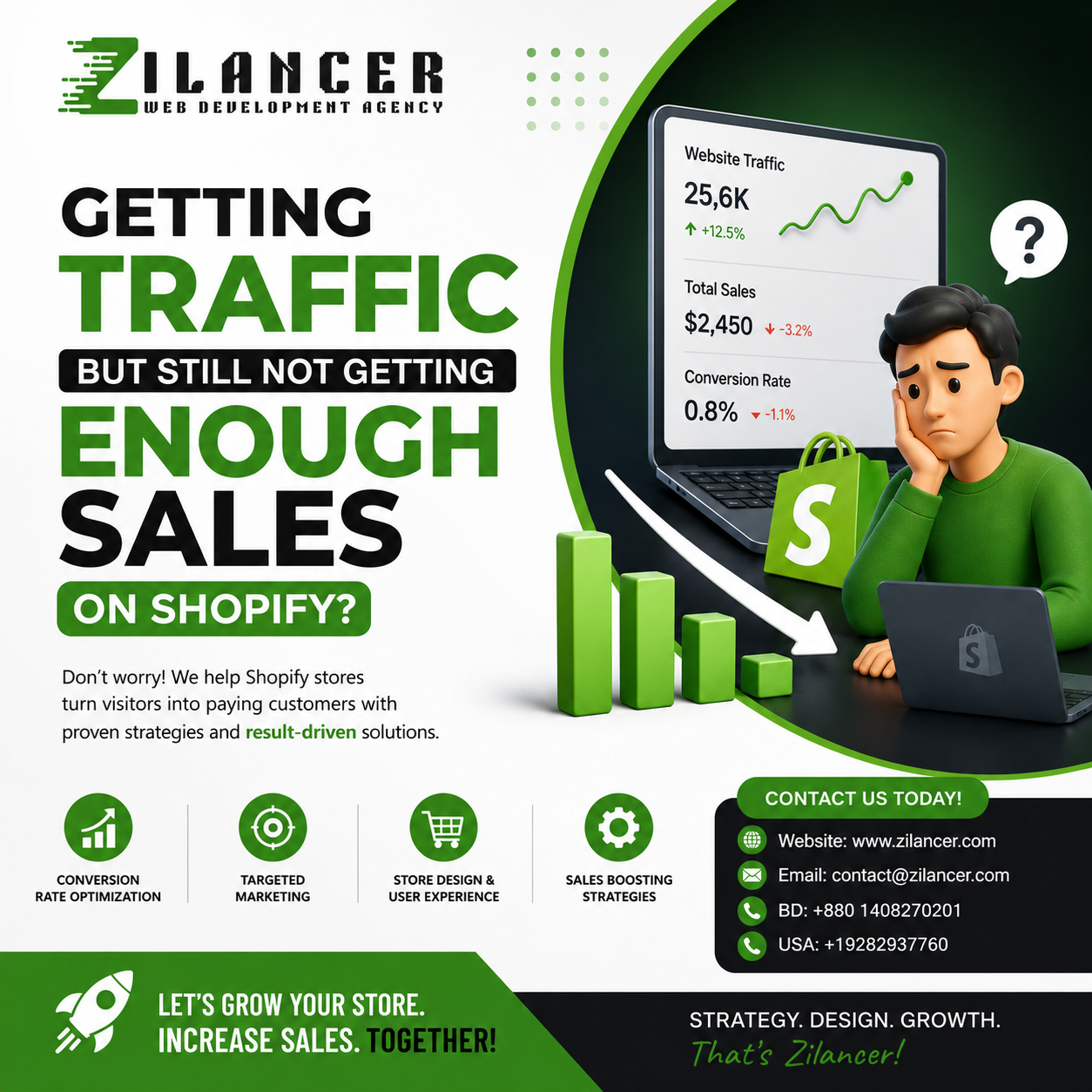
The Shopify ecommerce industry has become more competitive than ever before. Thousands of new online stores launch every single day, and almost every business is fighting for customer attention. While many Shopify store owners focus heavily on generating traffic through Facebook Ads, Google Ads, SEO, influencer marketing, and social media campaigns, most of them fail to understand one critical reality. Traffic alone does not create revenue. What truly matters is how effectively your Shopify store converts visitors into paying customers. This is where Shopify Conversion Rate Optimization becomes one of the most powerful growth strategies for any ecommerce business. Conversion Rate Optimization, commonly known as CRO, is the process of improving your Shopify store so that more visitors complete valuable actions such as making purchases, adding products to the cart, subscribing to newsletters, or contacting your business.
A beautifully designed Shopify store is not enough anymore. Modern ecommerce customers expect fast-loading pages, professional branding, mobile-friendly layouts, trust signals, persuasive product pages, easy navigation, and seamless checkout experiences. If your store fails to provide these experiences, visitors leave immediately and purchase from competitors instead. The good news is that even small improvements in conversion rate can significantly increase revenue without increasing advertising costs. A store converting at 1% can often double or triple its revenue simply by implementing proper CRO strategies. This is why successful ecommerce brands invest heavily in optimizing their stores for conversions.
At Zilancer, we help Shopify businesses improve their store performance using proven conversion rate optimization strategies that focus on real growth. Our team works with modern Shopify design principles, high-converting user experiences, speed optimization, professional branding, strategic layouts, and customer psychology to create Shopify stores that generate results.
Understanding Shopify Conversion Rate Optimization
Shopify Conversion Rate Optimization, commonly known as Shopify CRO, is the process of improving your Shopify store to increase the percentage of visitors who take action and become customers. Instead of focusing only on bringing more traffic to your website, CRO focuses on making your existing traffic more valuable by improving the overall shopping experience. In simple terms, if 100 people visit your Shopify store and only one person makes a purchase, your conversion rate is 1%. Conversion Rate Optimization helps increase that number by improving different elements of your store, such as design, speed, user experience, product pages, mobile responsiveness, trust signals, and checkout flow. Many Shopify store owners spend large amounts of money on Facebook Ads, Google Ads, SEO, and influencer marketing to attract visitors. However, traffic alone does not guarantee sales. If your store looks unprofessional, loads slowly, or creates confusion for customers, visitors will leave without purchasing anything. This is where Shopify CRO becomes extremely important.
A well-optimized Shopify store helps customers move smoothly through the buying journey. From the moment a visitor lands on the homepage to the final checkout step, every part of the website should guide the customer toward making a purchase. CRO focuses on removing obstacles, building trust, and creating a seamless experience that encourages conversions. Shopify Conversion Rate Optimization includes many different strategies. Improving website speed is one of the most important because slow-loading pages often cause visitors to leave immediately. Mobile optimization is also critical since most ecommerce shoppers now browse using smartphones. Product pages must include high-quality images, persuasive descriptions, customer reviews, and strong calls-to-action to improve purchasing decisions. Trust-building elements also play a major role in CRO. Customers are more likely to buy from stores that appear secure, professional, and reliable. Features such as secure payment icons, return policies, customer testimonials, and transparent shipping information help increase customer confidence.
Another important aspect of Shopify CRO is reducing cart abandonment. Many customers add products to their carts but leave before completing the purchase. Optimizing the checkout process, offering multiple payment methods, and simplifying the buying process can significantly reduce abandonment rates and improve overall sales. Successful Shopify brands understand that conversion optimization is not a one-time task. Customer behavior changes over time, and ecommerce businesses must continuously test and improve their stores to maximize performance. Small improvements in user experience can often lead to major increases in revenue without increasing advertising costs.At Zilancer, we help Shopify businesses improve conversion rates by creating modern, high-performing, and conversion-focused ecommerce experiences. Our team focuses on speed optimization, professional design, mobile responsiveness, user experience improvements, and strategic CRO solutions that help Shopify stores generate more sales and grow faster in competitive markets.
Why Conversion Rate Optimization Matters for Shopify Stores
Conversion Rate Optimization plays a crucial role in the success of every Shopify store because it directly impacts sales, profitability, and customer experience. Many ecommerce businesses focus heavily on driving traffic through paid ads, SEO, social media marketing, and influencer campaigns, but traffic alone does not guarantee revenue. If visitors land on your Shopify store and leave without making a purchase, your marketing investment goes to waste. This is why Conversion Rate Optimization, commonly known as CRO, has become one of the most important growth strategies for modern Shopify businesses.Shopify CRO helps businesses increase the percentage of visitors who convert into paying customers. Instead of constantly spending more money to attract new traffic, CRO focuses on improving the shopping experience so existing visitors are more likely to complete purchases. Even small improvements in conversion rates can create a major increase in revenue without increasing advertising costs.
One of the biggest reasons CRO matters is because online shoppers have become more demanding than ever before. Customers expect websites to load quickly, look professional, work perfectly on mobile devices, and provide a smooth shopping experience. If a Shopify store feels slow, confusing, outdated, or untrustworthy, visitors will quickly leave and buy from competitors instead.A well-optimized Shopify store builds trust and confidence. Customers are more likely to purchase from stores that have professional design, clear navigation, secure checkout systems, customer reviews, transparent policies, and high-quality product pages. CRO focuses on improving all of these elements to create a better user experience and increase conversions. Another major reason CRO is important is that it reduces customer acquisition costs. Running Facebook Ads, Google Ads, TikTok campaigns, and influencer promotions can become very expensive. If your store converts poorly, you must spend more money to generate the same number of sales. However, when your conversion rate improves, you generate more revenue from the same amount of traffic, making your marketing campaigns far more profitable.
Mobile optimization is also a key part of Shopify CRO. Most ecommerce shoppers now browse and purchase products using smartphones. If your store is not optimized for mobile users, you risk losing a large percentage of potential customers. CRO ensures that your Shopify store delivers a seamless experience across all devices. Conversion optimization also helps reduce cart abandonment. Many visitors add products to their shopping carts but leave before completing the purchase. This often happens because of hidden shipping fees, complicated checkout processes, slow loading pages, or a lack of trust. CRO strategies help identify these issues and improve the checkout experience to recover more sales. Another important benefit of CRO is improved customer satisfaction. When visitors enjoy a smooth and professional shopping experience, they are more likely to return for future purchases. This helps build customer loyalty and strengthens long-term business growth.
Successful Shopify businesses understand that increasing traffic is only one part of ecommerce success. The real goal is turning visitors into customers efficiently. A Shopify store with strong conversion optimization can outperform competitors even with less traffic because it generates more value from every visitor. At Zilancer, we help Shopify businesses improve conversions through professional CRO strategies, modern ecommerce design, speed optimization, mobile responsiveness, and user-focused experiences. Our goal is to help Shopify stores maximize sales, improve customer engagement, and achieve long-term ecommerce growth through smart optimization strategies.
Improve Shopify Store Speed for Better Conversions
Website speed is one of the most important factors that directly affects the success of any Shopify store. In today’s fast-moving digital world, online shoppers expect websites to load almost instantly. If a Shopify store takes too long to load, visitors often leave before they even see the products. This not only increases bounce rates but also reduces conversions, sales, and customer trust. That is why improving Shopify store speed is a critical part of Conversion Rate Optimization.A fast-loading Shopify store creates a smoother and more enjoyable shopping experience for customers. When pages load quickly, visitors can browse products easily, navigate collections without frustration, and complete purchases faster. This improves user satisfaction and increases the chances of converting visitors into paying customers. Slow websites create negative first impressions. Customers often associate slow performance with unprofessional businesses or unreliable services. Even if your products are excellent, a poor website speed can damage customer confidence and push potential buyers toward competitors. In ecommerce, every second matters because users have countless alternatives available online.
Mobile users are especially affected by slow-loading websites. Since a large percentage of Shopify traffic now comes from smartphones, speed optimization has become even more important. Mobile shoppers expect smooth experiences while browsing products, viewing images, and completing checkout processes. If a Shopify store performs poorly on mobile devices, businesses risk losing a significant number of potential customers. One of the biggest causes of slow Shopify stores is oversized image files. High-quality visuals are important for ecommerce, but unoptimized images can drastically slow down loading times. Compressing images properly while maintaining visual quality helps improve performance without affecting design. Another common issue is installing too many Shopify apps. Many store owners add multiple apps for different functionalities, but unnecessary apps often inject extra scripts into the website, reducing speed and performance. Removing unused apps and keeping only essential tools helps maintain a cleaner and faster Shopify store.
Using lightweight and professionally optimized Shopify themes also improves loading speed. Overly complex themes filled with heavy animations, sliders, and unnecessary effects can negatively impact performance. Clean and optimized designs create better user experiences and improve conversion rates. Shopify speed optimization also improves SEO performance. Search engines like Google prioritize fast-loading websites because they provide better user experiences. Faster Shopify stores often rank higher in search results, bringing more organic traffic and increasing business visibility. A fast Shopify store also helps reduce cart abandonment. Customers are more likely to complete purchases when the checkout process feels quick and seamless. Delays during checkout can frustrate users and cause them to abandon their carts before finalizing orders. Successful ecommerce brands understand that speed is not just a technical feature. It is a critical business factor that influences customer behavior, search rankings, advertising performance, and overall revenue growth. Improving website speed allows Shopify businesses to maximize the value of every visitor and every marketing campaign.
At Zilancer, we help Shopify businesses optimize store speed and improve overall ecommerce performance through modern design practices, lightweight development, image optimization, clean coding, and conversion-focused user experiences. Our goal is to create fast, professional, and high-performing Shopify stores that help businesses increase conversions and deliver exceptional shopping experiences to customers.
Why Businesses Choose Zilancer for Shopify CRO Services
In today’s competitive ecommerce industry, having a Shopify store is no longer enough to achieve consistent sales and long-term growth. Businesses need a store that is strategically designed to convert visitors into customers, create trust, improve user experience, and maximize every opportunity for revenue generation. This is why many brands choose Zilancer for professional Shopify Conversion Rate Optimization services. At Zilancer, we understand that successful Shopify stores are built with more than just attractive visuals. A high-converting ecommerce website requires the perfect combination of modern design, customer psychology, mobile optimization, speed performance, SEO structure, and seamless user experience. Our approach focuses on helping Shopify businesses improve conversions while creating a professional and memorable shopping experience for customers. One of the biggest reasons businesses choose Zilancer is our deep understanding of Shopify ecommerce growth strategies. We do not simply create beautiful stores. We build conversion-focused Shopify experiences designed to increase sales, improve customer engagement, and maximize business performance. Every design decision we make is focused on improving usability and encouraging visitors to take action.
Our team specializes in creating clean, modern, and high-performing Shopify stores that reflect professional branding standards. We understand how customers interact with ecommerce websites and use proven CRO techniques to guide visitors smoothly through the buying journey. From homepage layouts to product pages and checkout optimization, every element is strategically designed to improve conversions. Website speed optimization is another major reason businesses trust Zilancer. Slow-loading Shopify stores often lose customers before they even explore products. We focus on improving store performance through lightweight development, optimized design structures, image optimization, and clean coding practices that help Shopify websites load faster and perform better across all devices. Mobile optimization is also a core part of our Shopify CRO services. Since most ecommerce traffic now comes from smartphones, we create mobile-first Shopify experiences that ensure customers can browse, shop, and complete purchases easily on any device. A seamless mobile experience helps reduce bounce rates and increase sales significantly.
At Zilancer, we also focus heavily on improving user experience. We believe ecommerce websites should feel simple, intuitive, and enjoyable to use. Clear navigation, strategic layouts, persuasive product pages, strong call-to-actions, and trust-building elements all play a critical role in helping businesses achieve better results. Our CRO strategies are designed to reduce cart abandonment and increase customer confidence. We help businesses create smoother checkout experiences, improve trust signals, optimize product presentation, and simplify the overall shopping process to maximize completed purchases. Another reason businesses choose Zilancer is our commitment to customization and brand identity. Every Shopify business is unique, and we create solutions tailored to the specific goals, products, and audiences of each client. We focus on creating stores that not only perform well but also strengthen brand recognition and customer loyalty.
SEO-friendly development is also an important part of our Shopify optimization process. We create Shopify stores with clean structures, fast-loading pages, optimized layouts, and modern best practices that help improve search engine visibility while supporting better user experiences. At Zilancer, our mission is to help Shopify businesses grow through smart design, powerful optimization strategies, and conversion-focused ecommerce solutions. Whether you are launching a new Shopify store or improving an existing one, our team works to create high-performing online experiences that help businesses stand out in competitive markets and achieve long-term ecommerce success.
We help Shopify businesses implement proven conversion rate optimization strategies that improve performance and drive real results. Whether you are launching a new Shopify store or optimizing an existing one, our team focuses on creating professional ecommerce experiences that help businesses grow faster and convert more visitors into loyal customers.