






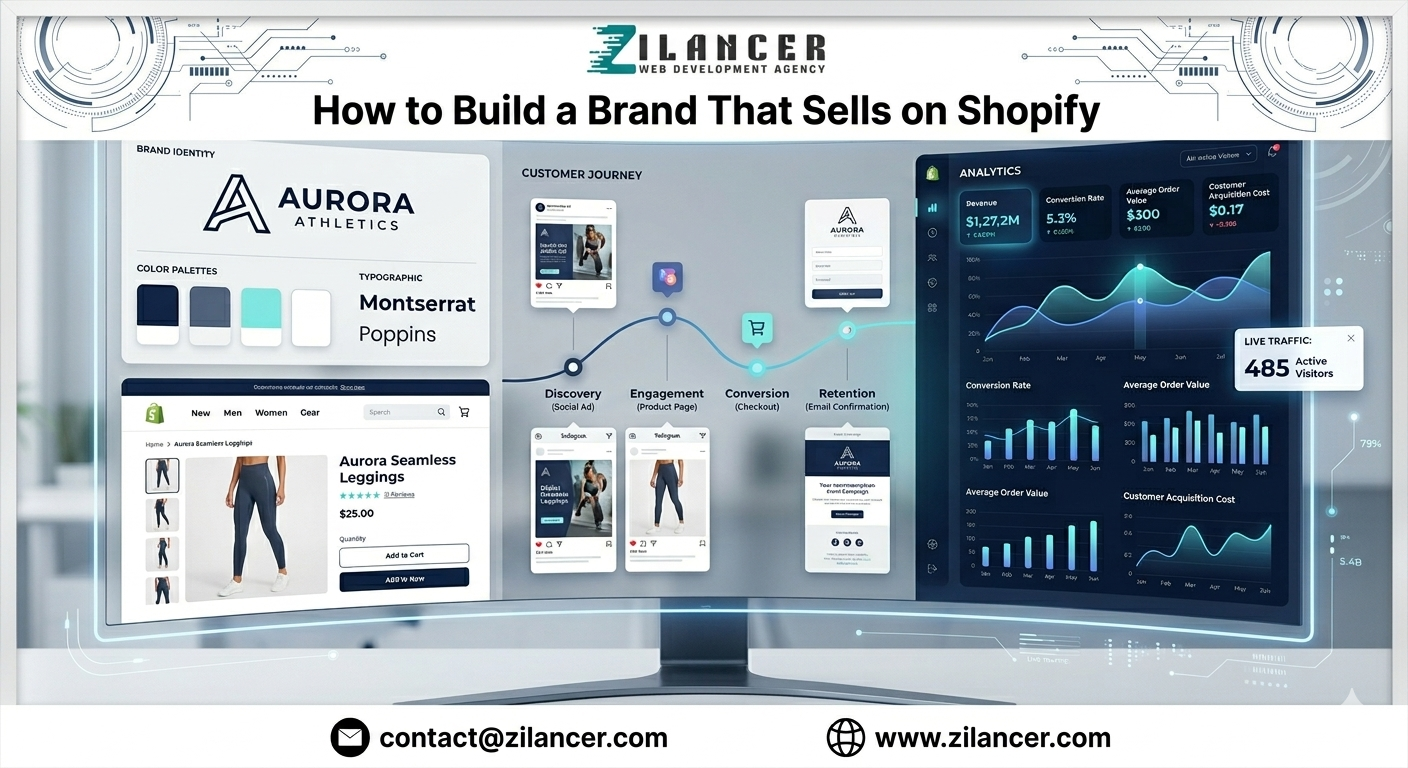
In today’s competitive eCommerce landscape, simply launching a Shopify store is not enough. Thousands of stores go live every day, but only a small percentage succeed. The difference is not just the product—it’s the brand behind the product. A strong brand builds trust, creates emotional connections, and turns one-time buyers into loyal customers. Without branding, your Shopify store becomes just another generic shop competing on price. With branding, it becomes a business people remember, trust, and recommend. At Zilancer, we believe that building a brand is not about logos or colors alone—it’s about creating a complete experience that makes customers choose you over competitors. A brand is more than your store’s name or design. It is the perception people have about your business. It includes how your store looks, how your message sounds, and how customers feel when they interact with your products.
When someone visits your Shopify store, they should instantly understand:
- Who you are
- What you offer
- Why they should trust you
A strong brand answers these questions without confusion. It creates clarity, consistency, and confidence.
Choosing the Right Niche for Your Brand
Choosing the right niche for your brand is one of the most important decisions you can make, as it directly impacts your ability to stand out, attract the right audience, and grow consistently. A niche is not just about picking an industry—it’s about identifying a specific group of people with a clear problem that you can solve better than others. When your focus is too broad, your message becomes diluted, competition increases, and it becomes harder to build trust. But when you narrow down your niche, your brand becomes more relevant, targeted, and memorable. The key to selecting the right niche lies in the balance between demand, expertise, and profitability. You want a market where people are actively looking for solutions and are willing to spend money. At the same time, your skills and experience should align with the needs of that audience. This alignment allows you to create more effective messaging, deliver better results, and position yourself as an authority rather than just another option.
A well-defined niche also simplifies your marketing. Instead of trying to speak to everyone, you can tailor your offers, content, and ads to a specific audience. This increases engagement, improves conversion rates, and reduces wasted effort. For example, targeting “eCommerce brands” is broad, but focusing on “Shopify stores struggling with low conversion rates” creates a much clearer and more compelling positioning. Another advantage of choosing the right niche is long-term growth. When you consistently serve a specific audience, you gain deeper insights into their behavior, challenges, and preferences. This allows you to refine your strategies over time and build systems that deliver predictable results. It also opens opportunities for retention, referrals, and brand loyalty. Ultimately, the right niche gives your business direction. It helps you focus your energy, sharpen your message, and build a stronger connection with your audience. Instead of competing in a crowded market, you create your own space where your brand becomes the go-to solution.
Creating a Powerful Brand Story
Creating a powerful brand story is about more than just telling people what you do—it’s about showing them why you exist and why it matters. In a crowded market where many businesses offer similar products or services, your story becomes the emotional connection that sets you apart. People don’t just buy based on logic; they buy based on trust, relatability, and meaning. A strong brand story helps you build that connection by making your business feel human and purposeful. At its core, a compelling brand story has clarity and authenticity. It explains who you serve, the problem you are solving, and the journey that led you to this point. This doesn’t mean you need a dramatic or extraordinary background. What matters is honesty and relevance. When your audience can see themselves in your story or relate to the challenges you address, it creates a sense of familiarity and trust.
A powerful story also focuses on transformation. Instead of positioning your brand as the hero, your customer becomes the center of the narrative. Your role is to guide them from their current problem to a better outcome. This shift makes your messaging more engaging and customer-focused, rather than self-promotional. It clearly communicates the value you bring and the results people can expect. Consistency is another key element. Your brand story should be reflected across all touchpoints—your website, ads, social media, and customer interactions. When your message remains aligned everywhere, it reinforces your identity and makes your brand more memorable. Over time, this consistency builds recognition and strengthens credibility. Ultimately, a powerful brand story gives your business a voice and a purpose. It turns your brand from just another option into something people can connect with, trust, and remember. In the long run, that connection is what drives loyalty, differentiation, and sustainable growth.
Designing a High-Converting Shopify Store
Designing a high-converting Shopify store is not just about making it look attractive—it’s about creating a smooth, focused buying experience that guides visitors toward making a purchase. A visually appealing store is important, but if it doesn’t convert traffic into customers, it fails its main purpose. Every element of your Shopify store should work together to reduce confusion, build trust, and make the buying decision as easy as possible. The foundation of a high-converting store starts with clarity. When a visitor lands on your website, they should immediately understand what you sell, who it is for, and why it matters. Your homepage should communicate your core value within seconds, using simple messaging, clean design, and strong visuals. A confusing or cluttered layout often leads to higher bounce rates and lost sales opportunities.
Product pages are where conversions truly happen, so they must be optimized carefully. High-quality images, clear product descriptions, and benefit-focused messaging are essential. Instead of just listing features, you should explain how the product solves a problem or improves the customer’s life. Adding elements like reviews, ratings, and trust badges also helps reduce hesitation and builds credibility. Another important factor is user experience. A high-converting Shopify store must be fast, mobile-friendly, and easy to navigate. Most users shop on mobile devices, so a responsive design is critical. Simple menus, clear categories, and a smooth checkout process reduce friction and prevent customers from abandoning their carts.
Trust-building elements also play a major role in conversions. Things like secure payment icons, return policies, customer testimonials, and social proof reassure buyers that they are making the right decision. The more confident a customer feels, the more likely they are to complete their purchase. Ultimately, designing a high-converting Shopify store is about strategy, not just design. It combines psychology, user experience, and marketing principles to create a store that doesn’t just attract visitors—but consistently turns them into paying customers.
Building Trust Through Social Proof
Building trust through social proof is one of the most effective ways to increase conversions and reduce hesitation in a customer’s buying decision. People naturally look for validation before they purchase anything, especially online, where they cannot physically interact with a product or service. Social proof acts as that validation by showing real evidence that others have already tried, trusted, and benefited from your offer. At its core, social proof works because humans follow behavior patterns. When potential customers see reviews, testimonials, case studies, or user-generated content, they feel more confident that they are making the right choice. It reduces uncertainty and builds credibility, especially for new or unfamiliar brands. In many cases, strong social proof can be the deciding factor between a visitor leaving your site or becoming a paying customer.
Several forms of social proof can strengthen your brand. Customer reviews and ratings are among the most powerful because they provide direct feedback from real users. Testimonials add a personal touch by highlighting specific results or experiences. Case studies go even deeper by showing measurable outcomes and transformations. Even social signals like follower counts, shares, or engagement can help reinforce trust when used correctly. Placement is also important when using social proof. It should not be hidden or buried on a separate page. Instead, it should be strategically placed throughout your website—on product pages, landing pages, checkout pages, and even ads. When customers see repeated evidence of trust at multiple stages of their journey, it reinforces confidence and reduces friction in decision-making.
Consistency matters as well. Authentic and regularly updated social proof is far more effective than outdated or generic reviews. Real names, photos, and detailed experiences add credibility and make the feedback more believable. Ultimately, building trust through social proof is about showing—not telling—that your business delivers value. When people see that others have already achieved positive results, it becomes much easier for them to trust your brand and take action.
Creating Content That Connects
Creating content that connects is not just about posting regularly or following trends—it’s about understanding your audience on a deeper level and communicating in a way that feels relevant, human, and valuable. In a digital world filled with noise, people don’t respond to generic messages anymore. They respond to content that reflects their problems, goals, and emotions. When your content connects, it doesn’t just get views—it builds trust and drives action. The foundation of connected content is understanding your audience. You need to know what they struggle with, what they want to achieve, and what is stopping them from getting there. When your content directly speaks to these pain points and desires, it instantly becomes more engaging. Instead of talking about your product or service in isolation, you position it as a solution to something your audience already cares about.
Another key element is authenticity. People can easily detect overly promotional or artificial content. When your message feels real, relatable, and honest, it becomes easier for people to trust you. Sharing insights, experiences, and even challenges helps humanize your brand. This makes your content more relatable and encourages a stronger emotional connection. Clarity also plays a major role. Even the best ideas lose impact if they are confusing or complicated. Simple, direct communication ensures that your message is understood quickly and remembered easily. Whether it’s a social media post, ad copy, or blog content, clarity always improves engagement and response.
Storytelling is another powerful tool for connection. Instead of just presenting facts, you can frame your message in a way that takes the audience on a journey. Stories help people see themselves in your message, making it more memorable and impactful. They transform information into experience, which is far more engaging. Ultimately, creating content that connects is about empathy, clarity, and relevance. When you focus less on selling and more on understanding and helping your audience, your content naturally becomes more powerful—and your brand becomes more meaningful in their eyes.
Leveraging Facebook and Google Ads for Brand Growth
Leveraging Facebook and Google Ads for brand growth is one of the most effective ways to scale a business in today’s digital landscape. These platforms give you access to massive audiences and advanced targeting options, allowing you to reach the right people at the right time with the right message. However, real growth doesn’t come from simply running ads—it comes from building a structured advertising system that consistently attracts, converts, and retains customers. Facebook Ads are powerful for demand generation and audience targeting. They allow you to reach people based on interests, behaviors, demographics, and even past interactions with your brand. This makes it ideal for building awareness and creating interest in your products or services. With strong creatives, compelling messaging, and strategic audience segmentation, Facebook Ads can introduce your brand to new potential customers who may not have discovered you otherwise.
Google Ads, on the other hand, is highly intent-driven. It captures users who are actively searching for solutions, products, or services like yours. This makes it one of the strongest platforms for high-intent conversions. Whether through search ads, shopping campaigns, or display remarketing, Google Ads helps you appear exactly when customers are ready to take action. This intent-based targeting often leads to higher-quality leads and faster conversions. When combined, Facebook and Google Ads create a powerful growth ecosystem. Facebook helps you build awareness and generate interest, while Google captures that demand when users are ready to buy. Together, they cover the entire customer journey—from discovery to decision. This synergy allows businesses to create more consistent and predictable revenue streams.
However, success on these platforms depends heavily on strategy and optimization. Proper tracking setup, audience testing, creative variation, and continuous performance analysis are essential. Without data-driven optimization, ad spend can easily become inefficient. Businesses that succeed with ads are those that treat them as a long-term system rather than a short-term push. Ultimately, leveraging Facebook and Google Ads for brand growth is about precision, consistency, and optimization. When used correctly, they don’t just bring traffic—they build visibility, generate demand, and create a scalable path for sustainable business growth.
Focusing on Customer Experience
Focusing on customer experience means prioritizing how people feel and interact with your brand at every stage of their journey, from the first touchpoint to post-purchase support. It goes beyond simply delivering a product or service—it’s about creating a smooth, enjoyable, and trustworthy experience that makes customers want to return. In a competitive market, customer experience is often the key factor that separates growing brands from those that struggle to retain attention. A strong customer experience begins with simplicity. When customers interact with your website, ads, or communication channels, everything should feel clear and easy to understand. Confusion creates friction, and friction leads to drop-offs. Whether it’s navigating a Shopify store, reading product information, or completing a checkout process, every step should be designed to reduce effort and increase confidence.
Communication also plays a major role in shaping experience. Customers appreciate timely, transparent, and helpful responses. Whether it’s through email, chat, or support systems, the way you communicate can significantly impact trust. Clear updates about orders, honest policies, and proactive assistance all contribute to a positive impression of your brand. Another important aspect is personalization. When customers feel that a brand understands their needs and preferences, they are more likely to stay engaged. Personalized recommendations, tailored offers, and relevant messaging help create a sense of connection. This makes the experience feel less transactional and more meaningful. Consistency is equally important. A great experience should not be limited to a single interaction. From advertising to after-sales support, every touchpoint should reflect the same level of quality and care. Inconsistent experiences can quickly break trust, even if individual parts of the journey are strong.
Ultimately, focusing on customer experience is about building relationships, not just completing sales. When customers feel valued, understood, and supported, they are more likely to return, spend more, and recommend your brand to others. Over time, this creates loyalty, which becomes one of the most powerful drivers of sustainable business growth.
Building Long-Term Brand Loyalty
Building long-term brand loyalty is about creating relationships with customers that go far beyond a single purchase. It focuses on turning first-time buyers into repeat customers and eventually into brand advocates who trust your business and recommend it to others. In today’s competitive market, where customers have endless choices, loyalty is what keeps a brand stable, profitable, and resilient over time. At the heart of brand loyalty is consistent value delivery. Customers stay loyal when they repeatedly experience quality, reliability, and positive outcomes from your product or service. If your brand consistently meets or exceeds expectations, trust naturally develops. This trust becomes the foundation for long-term engagement, making customers more likely to return instead of switching to competitors.
Emotional connection also plays a major role in loyalty. People don’t just remember what a brand sells—they remember how it made them feel. Brands that communicate clearly, tell meaningful stories, and show genuine care for their customers are more likely to build strong emotional bonds. This connection transforms a simple transaction into a relationship, where customers feel personally attached to the brand. Another key factor is customer experience. A smooth, supportive, and enjoyable experience at every stage of the journey strengthens loyalty significantly. From easy navigation on your website to fast support and clear communication, every interaction shapes how customers perceive your brand. When customers feel valued and respected, they are more likely to stay loyal even when competitors offer similar products.
Rewarding repeat customers is also an effective way to build loyalty. Loyalty programs, special discounts, exclusive offers, and personalized communication make customers feel appreciated. These small gestures reinforce the idea that staying with your brand brings added value. Ultimately, building long-term brand loyalty is not about one-time efforts—it is about consistency, trust, and ongoing relationship building. When customers believe in your brand and feel connected to it, they don’t just buy from you once—they choose you repeatedly, becoming the foundation of sustainable business growth.
Common Mistakes to Avoid
Common mistakes in business and marketing often don’t come from lack of effort, but from lack of clarity and strategy. Many brands work hard but still struggle with results because they repeat avoidable errors that slow down growth, waste budget, and reduce customer trust. Understanding these mistakes is important if you want to build a stable and scalable business. One of the most common mistakes is lacking a clear offer. When a business cannot clearly explain what it does, who it serves, and what outcome it delivers, customers get confused and leave. A vague message forces people to think too much, and confusion almost always kills conversions. Clarity should always come before complexity.
Another major mistake is ignoring proper tracking and data. Many businesses run ads or marketing campaigns without accurately measuring results. Without clean data, decisions become guesswork, and it becomes impossible to know what is actually working. This leads to wasted budget and inconsistent performance. Data should guide every important decision, not assumptions. Over-reliance on a single traffic source is also a serious issue. Businesses that depend only on one platform, such as Facebook or Google Ads, become vulnerable to sudden changes in cost or algorithm updates. A strong strategy always includes diversification, ensuring that revenue does not collapse if one channel underperforms. Poor customer experience is another mistake that directly affects long-term growth. Even if marketing brings in customers, a confusing website, slow response time, or weak support can quickly destroy trust. Every interaction matters, and small friction points can lead to lost sales and reduced loyalty. Many businesses also fail to focus on retention. They constantly chase new customers but ignore existing ones. This increases acquisition costs and limits long-term profitability. Retaining customers is often easier and more profitable than acquiring new ones, yet it is frequently overlooked. Ultimately, avoiding these common mistakes is about building discipline and structure. When you focus on clarity, data, diversification, customer experience, and retention, your business becomes more stable, predictable, and capable of long-term growth.
How Zilancer Helps You Build a Brand That Sells
Zilancer helps you build a brand that sells by focusing on the core elements that actually drive revenue—clarity, performance marketing, data, and customer behavior. Instead of relying on random tactics or inconsistent marketing efforts, the approach is structured around building a system where your brand consistently attracts the right audience and converts them into paying customers. The first step is positioning. Many businesses struggle because their message is unclear or too broad. Zilancer helps refine your offer so it clearly communicates what you do, who you serve, and the exact result customers can expect. When your positioning is sharp, your brand becomes easier to understand, and customers are more likely to trust and engage with it. Next comes performance-driven advertising. Through platforms like Facebook and Google Ads, Zilancer builds targeted campaigns designed not just for traffic, but for conversions. This includes testing creatives, optimizing audiences, and refining messaging based on real performance data. The goal is to ensure every advertising dollar contributes directly to measurable results, not wasted impressions.
Tracking and analytics are also a key part of the process. Without accurate data, scaling becomes guesswork. Zilancer focuses on setting up proper conversion tracking and analyzing user behavior so decisions are based on facts, not assumptions. This allows continuous optimization and helps identify what is actually driving sales. Beyond acquisition, Zilancer also emphasizes retargeting and retention strategies. Most customers don’t convert on the first interaction, so bringing them back through strategic follow-ups, remarketing ads, and email flows significantly improves conversion rates. At the same time, retention strategies help turn one-time buyers into repeat customers, increasing long-term revenue stability. Ultimately, Zilancer helps you move from random marketing efforts to a complete sales system. By combining clear messaging, data-driven advertising, and customer-focused strategies, it builds a brand that doesn’t just get attention—but consistently generates sales and long-term growth.
Building a brand that sells on Shopify is not an overnight process. It requires strategy, consistency, and a deep understanding of your audience. When you focus on branding, you stop competing on price and start competing on value. If you want to succeed in eCommerce, don’t just build a store—build a brand. And if you’re ready to take that step, Zilancer is here to help you every step of the way.