




Organic traffic is one of the most valuable assets for any Shopify business. Unlike paid advertising, where visibility disappears the moment you stop spending, search engine optimization (SEO) builds long-term authority and consistent traffic without increasing costs over time. When your store ranks on Google for high-intent keywords, you attract visitors who are actively searching for your products. These are not casual browsers — they are potential buyers ready to take action. Shopify SEO focuses on optimizing your store’s structure, content, and performance so search engines can understand, rank, and confidently recommend your pages to the right audience. When done strategically, SEO becomes more than just a marketing tactic; it becomes a powerful growth engine.
At Zilancer, we approach SEO as a complete growth system rather than a simple checklist. Every element of your Shopify store — from technical setup to product descriptions — works together to improve rankings, enhance user experience, and increase conversions.
Understanding the Foundation of Shopify SEO
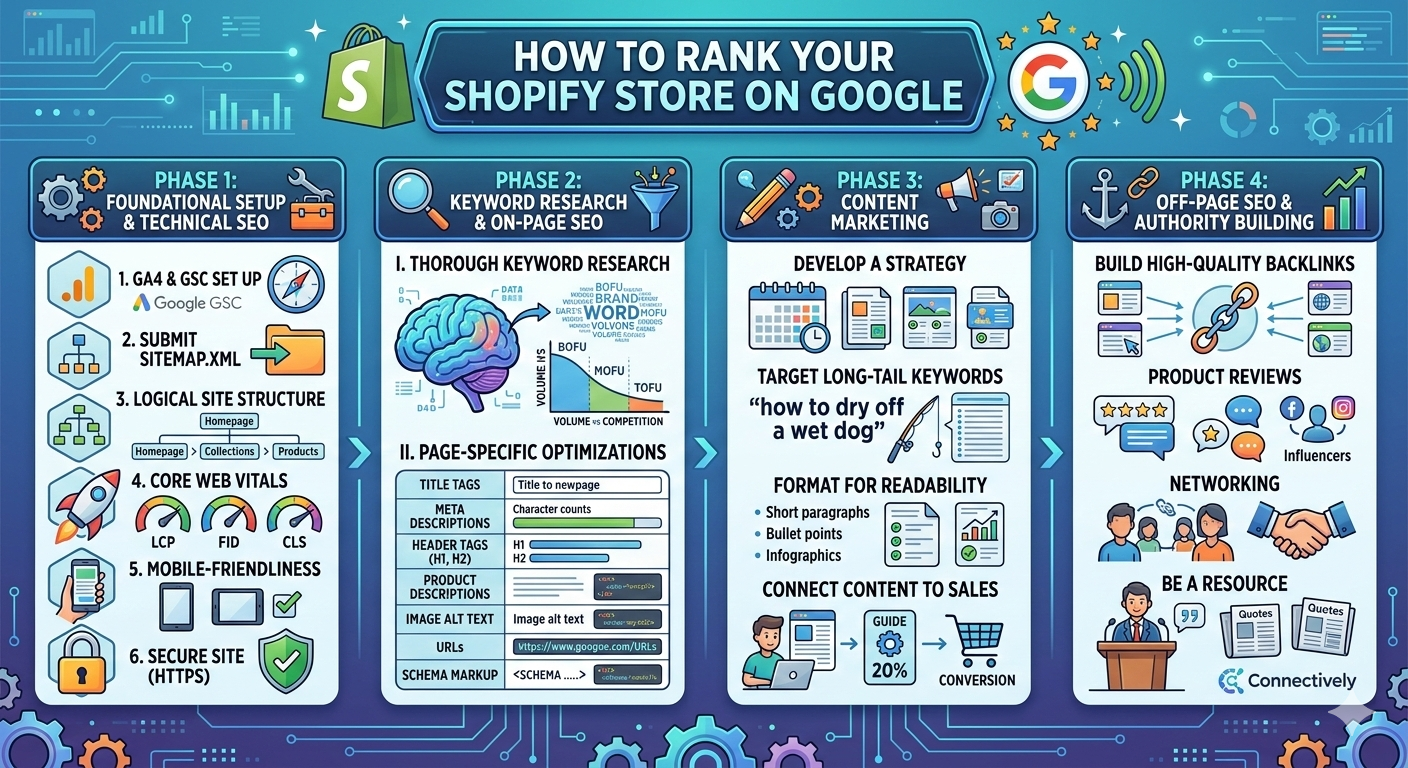
A strong SEO strategy begins with a solid foundation. Shopify SEO combines three essential elements: technical optimization, on-page content, and user experience. These components ensure that search engines can crawl your store efficiently and that customers find exactly what they need when they land on your website.
Clean site architecture is the first step. Your store should have a logical structure where collections connect naturally to products, and internal links guide users smoothly across pages. Clear and optimized URLs also help search engines understand page context. Loading speed is another major ranking factor. A slow website increases bounce rates and reduces conversions. Optimizing images, minimizing unnecessary apps, and using lightweight themes significantly improve performance. Since most online shoppers browse from their smartphones, a mobile-friendly design is no longer optional — it is essential. When these foundational elements are strong, your store becomes easier to rank and more enjoyable to use. SEO success starts with understanding how your customers search. Keyword research helps identify the exact words and phrases potential buyers type into Google when looking for products like yours. These insights allow you to align your store content with real search demand.
However, effective SEO is not about targeting high-volume keywords alone. It is about targeting the right keywords. Long-tail keywords often have lower competition but higher buying intent. For example, someone searching for “buy minimalist leather wallet online” is far more likely to convert than someone simply searching “wallet.” Strategically placing keywords across product titles, descriptions, collection pages, headings, URLs, and meta tags improves relevance. At the same time, keyword stuffing must be avoided. Content should remain natural, persuasive, and helpful to real customers. By focusing on purchase-intent keywords, your Shopify store attracts qualified traffic that converts instead of random visitors who leave without buying.
On-Page Optimization That Improves Visibility
On-page SEO ensures that each page clearly communicates its purpose to search engines. Optimized title tags and compelling meta descriptions increase visibility and improve click-through rates from search results. Even if your page ranks well, a weak meta description can reduce traffic.
Well-structured headings (H1, H2, H3) organize content and help Google understand page hierarchy. Product descriptions should be unique, detailed, and benefit-focused rather than copied from suppliers. Duplicate content weakens your store’s authority and limits ranking potential.
Internal linking also plays a major role. Linking related products and collections helps distribute authority across your store and keeps users browsing longer. The longer visitors stay, the stronger your engagement signals become — which can positively impact rankings.
Clear navigation, trust badges, FAQs, and structured content not only improve SEO but also increase conversion rates.
Technical SEO works behind the scenes to ensure your Shopify store performs optimally. Even the best content may struggle to rank if technical issues exist.
Proper indexing allows search engines to crawl your important pages while ignoring unnecessary ones. Generating and submitting a sitemap to Google Search Console helps search engines discover new content faster.
Structured data (schema markup) enhances search listings by displaying rich results such as star ratings, prices, and product availability. These visual enhancements increase click-through rates and make your listing stand out from competitors.
Broken links, duplicate pages, slow-loading scripts, and unoptimized images can negatively impact performance. Regular technical audits ensure your store remains healthy and competitive.
At Zilancer, we make sure technical performance supports growth instead of limiting it.
Content as an SEO Growth Engine
Product pages alone are not enough to dominate search results. Content marketing expands your visibility and builds authority in your niche.
Blog posts, buying guides, how-to articles, and educational resources allow your Shopify store to rank for informational keywords. For example, a skincare brand can publish guides on “how to build a morning skincare routine” or “ingredients to avoid for sensitive skin.” These articles attract top-of-funnel visitors who may later become customers.
High-quality content also builds trust. When customers see valuable, helpful information, they perceive your brand as knowledgeable and reliable. Over time, consistent content improves domain authority and increases ranking opportunities across multiple keywords.
Content also strengthens internal linking and keeps visitors engaged longer — two powerful signals for SEO performance. Google increasingly prioritizes user experience. If visitors land on your site and quickly leave, rankings may decline. That is why SEO and conversion optimization must work together. Clear product images, persuasive copy, easy checkout processes, fast loading speed, and mobile responsiveness all influence both rankings and revenue. A well-designed Shopify store encourages users to explore, add products to their cart, and complete purchases. SEO brings traffic — but user experience turns that traffic into sales. Off-page SEO plays a critical role in ranking higher on Google. Backlinks from reputable websites signal trust and authority. When other sites reference your content or products, search engines view your store as credible.
Guest posting, influencer collaborations, PR campaigns, and shareable content strategies help generate high-quality backlinks. However, quality matters more than quantity. Spammy links can damage rankings instead of improving them. A strategic backlink approach strengthens your store’s overall domain authority and competitive positioning. SEO is not an instant solution. Unlike paid advertising, results do not appear overnight. However, SEO delivers compounding returns. As your rankings improve, traffic grows consistently without increasing ad spend. Over time, your Shopify store becomes more visible, more trustworthy, and more profitable. Instead of constantly relying on ads, you build a sustainable traffic source that supports long-term scaling. The brands that dominate Google understand one key principle — SEO is an investment, not an expense.
Ranking a Shopify store on Google requires strategy, patience, and continuous optimization. From technical performance and keyword research to content marketing and user experience, every component must work together.
When SEO, speed, and smart design align, organic traffic becomes a powerful and predictable revenue channel.
At Zilancer, we don’t just optimize Shopify stores to rank — we build growth-focused systems designed to convert, scale, and create long-term digital success.