







Choosing the right eCommerce platform is a critical decision for any online business. The platform you use affects your website’s performance, scalability, security, and overall user experience. For many years, Magento has been a powerful solution for large and complex e-commerce stores. However, in recent years, many businesses have started migrating from Magento to Shopify.
This shift is largely driven by the need for simplicity, lower maintenance costs, and faster store management. While Magento offers extensive customization capabilities, it often requires significant technical expertise and ongoing maintenance. Shopify, on the other hand, provides a fully managed eCommerce environment that allows businesses to focus more on selling and less on technical management.
At Zilancer, we work with many businesses that want to move their online stores from Magento to Shopify. In most cases, the transition helps them simplify operations, improve website performance, and reduce technical complexity.
However, like any major platform change, migrating from Magento to Shopify comes with both benefits and challenges. Understanding these factors can help businesses make informed decisions and plan a successful migration strategy.
Understanding Magento and Shopify
Magento is a powerful open-source eCommerce platform designed for highly customizable and large-scale online stores. It provides extensive flexibility and control over every aspect of the store, including design, functionality, and integrations. However, managing Magento often requires experienced developers, dedicated hosting infrastructure, and continuous maintenance.
Shopify, in contrast, is a fully hosted eCommerce platform designed to simplify the process of running an online store. It provides built-in hosting, security, and maintenance while offering a user-friendly interface that allows businesses to manage products, orders, and customers easily.
Because Shopify handles many technical aspects automatically, it has become an attractive alternative for businesses that want to streamline their operations.
Benefits of Migrating from Magento to Shopify
1. Simplified Store Management
One of the biggest advantages of Shopify is its ease of use. Magento’s flexibility comes with complexity, which can make daily store management challenging for non-technical users.
Shopify provides a clean and intuitive dashboard where store owners can manage products, orders, customers, and marketing campaigns without needing technical knowledge. This simplicity helps businesses operate more efficiently and reduces reliance on developers.
2. Lower Development and Maintenance Costs
Magento stores often require continuous development support. Businesses must manage hosting environments, perform regular updates, and ensure compatibility between extensions.
These tasks can lead to significant maintenance costs over time.
Shopify reduces these expenses because the platform is fully managed. Hosting, security updates, and performance optimizations are handled automatically by Shopify, allowing businesses to lower their operational costs.
3. Faster Setup and Deployment
Launching or updating a Magento store can take considerable time due to complex configurations and development requirements.
Shopify simplifies the setup process. Businesses can quickly launch new stores, install apps, and customize themes without extensive development work.
This faster deployment allows companies to respond quickly to market opportunities and scale their online presence more efficiently.
4. Reliable Hosting and Security
Magento stores rely heavily on external hosting providers. The quality of hosting directly affects website performance, uptime, and security.
Store owners must also manage security patches, SSL certificates, and backups.
Shopify provides secure hosting and built-in security features as part of the platform. All Shopify stores include SSL encryption, automatic updates, and advanced infrastructure that ensures consistent performance.
This significantly reduces the risk of security vulnerabilities and downtime.
5. Improved Website Performance
Website speed is a critical factor in both user experience and search engine optimization.
Magento stores can sometimes experience performance issues if the hosting infrastructure is not properly optimized or if too many extensions are installed.
Shopify is built on a high-performance infrastructure designed specifically for eCommerce. With its global content delivery network and optimized environment, Shopify stores typically load faster and provide smoother user experiences.
Faster loading speeds often lead to higher engagement and improved conversion rates.
6. Extensive App Ecosystem
Shopify offers a large ecosystem of apps that allow businesses to easily add advanced functionality to their stores.
From marketing automation and inventory management to shipping solutions and analytics tools, the Shopify App Store provides thousands of integrations designed specifically for eCommerce.
While Magento also offers extensions, many of them require more complex installation and maintenance compared to Shopify apps.
7. Better Customer Support
Magento users often depend on community forums or external developers for support when issues arise.
Shopify provides dedicated customer support available 24 hours a day. Businesses can quickly receive assistance with technical issues, store configuration, or troubleshooting.
Having reliable support can significantly reduce downtime and improve operational efficiency.
Challenges of Migrating from Magento to Shopify
While the benefits of Shopify are significant, businesses should also be aware of the challenges involved in migrating from Magento.
1. Data Migration Complexity
Migrating an existing store involves transferring important data such as products, customer information, order history, and product categories.
Ensuring that all this data is accurately transferred without errors can be a complex process. Careful planning and testing are required to prevent data loss or inconsistencies.
Professional migration tools and experienced developers can help ensure a smooth transition.
2. Custom Feature Limitations
Magento offers a high level of customization because it is open-source. Businesses with highly specialized functionality may find that certain custom features are not directly available on Shopify.
Although Shopify provides many apps and integrations, some complex Magento features may require custom development or workflow adjustments.
Businesses must evaluate whether their unique requirements can be effectively replicated on Shopify.
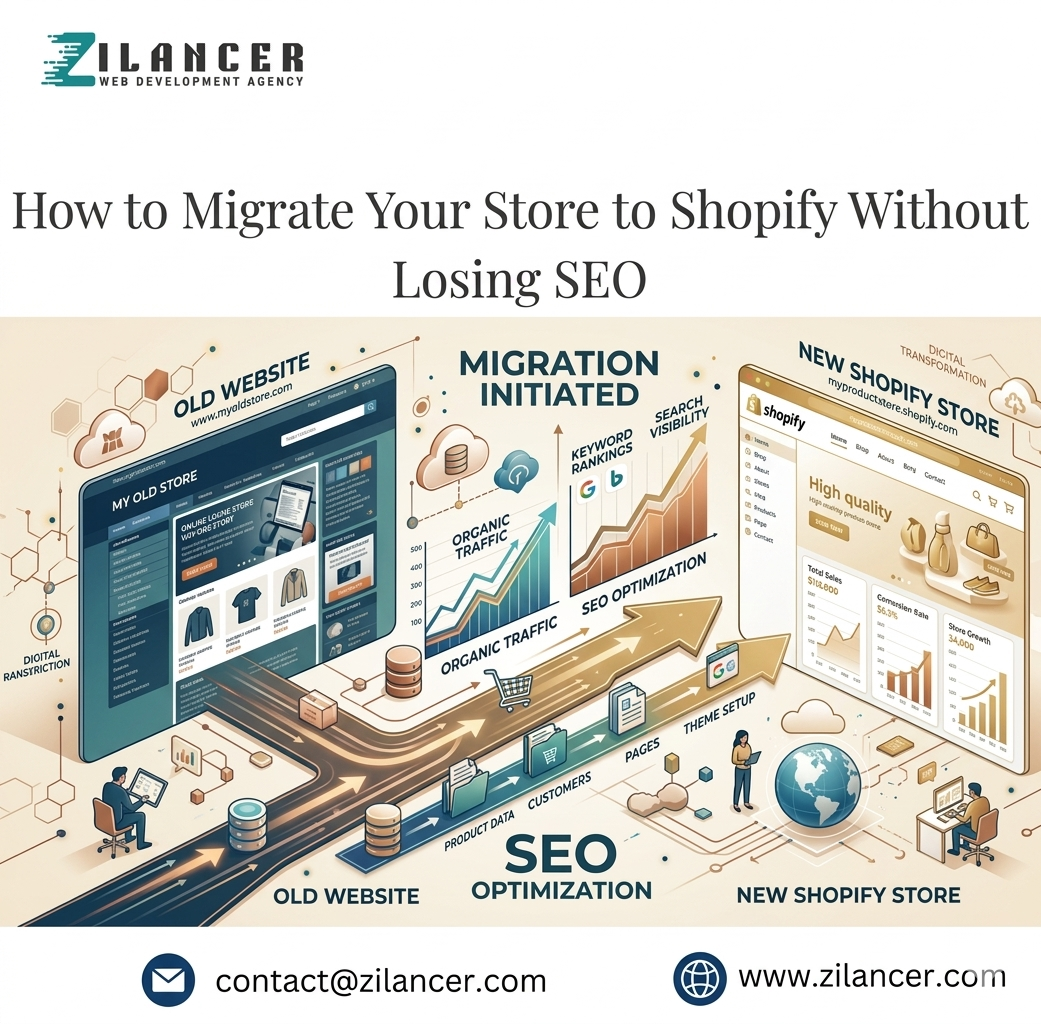
3. SEO Considerations
Search engine rankings are extremely important for eCommerce stores. During migration, URLs, page structures, and metadata may change.
If SEO elements are not properly managed, there is a risk of losing search rankings and organic traffic.
Implementing proper redirects, preserving metadata, and maintaining site structure are essential steps during the migration process.
4. Design and Theme Adjustments
Magento themes are not directly compatible with Shopify. This means businesses often need to redesign their store when migrating.
While this can be an opportunity to improve user experience and modernize the store design, it also requires careful planning and development work.
Ensuring that the new design maintains brand identity and functionality is an important part of the migration process.
5. Learning a New Platform
Although Shopify is generally easier to use than Magento, store owners and teams may still need time to learn the new system.
Training staff on Shopify’s interface, tools, and workflows helps ensure that the business can operate efficiently after the migration.
Fortunately, Shopify’s user-friendly design makes the learning process relatively quick for most teams.
Best Practices for a Successful Migration
To ensure a smooth transition from Magento to Shopify, businesses should follow a structured migration strategy.
Planning the migration carefully helps minimize disruptions and ensures that all essential data is transferred correctly.
Important steps typically include auditing the current Magento store, preparing product and customer data, setting up the Shopify environment, redesigning the store interface, and performing thorough testing before launch.
Working with experienced migration specialists can help identify potential risks and ensure that the new store functions properly from day one.
Conclusion
Migrating from Magento to Shopify can provide significant advantages for businesses looking to simplify store management, reduce maintenance costs, and improve website performance.
Shopify’s fully hosted infrastructure, user-friendly interface, and extensive app ecosystem make it an attractive platform for modern eCommerce brands.
However, migration is a complex process that requires careful planning, data management, and design adjustments. Businesses must evaluate both the benefits and challenges before making the transition.
When executed properly, moving from Magento to Shopify can lead to a more efficient, scalable, and high-performing online store.
At Zilancer, we help businesses migrate from Magento to Shopify with minimal disruption while ensuring that performance, SEO, and user experience are fully optimized.