







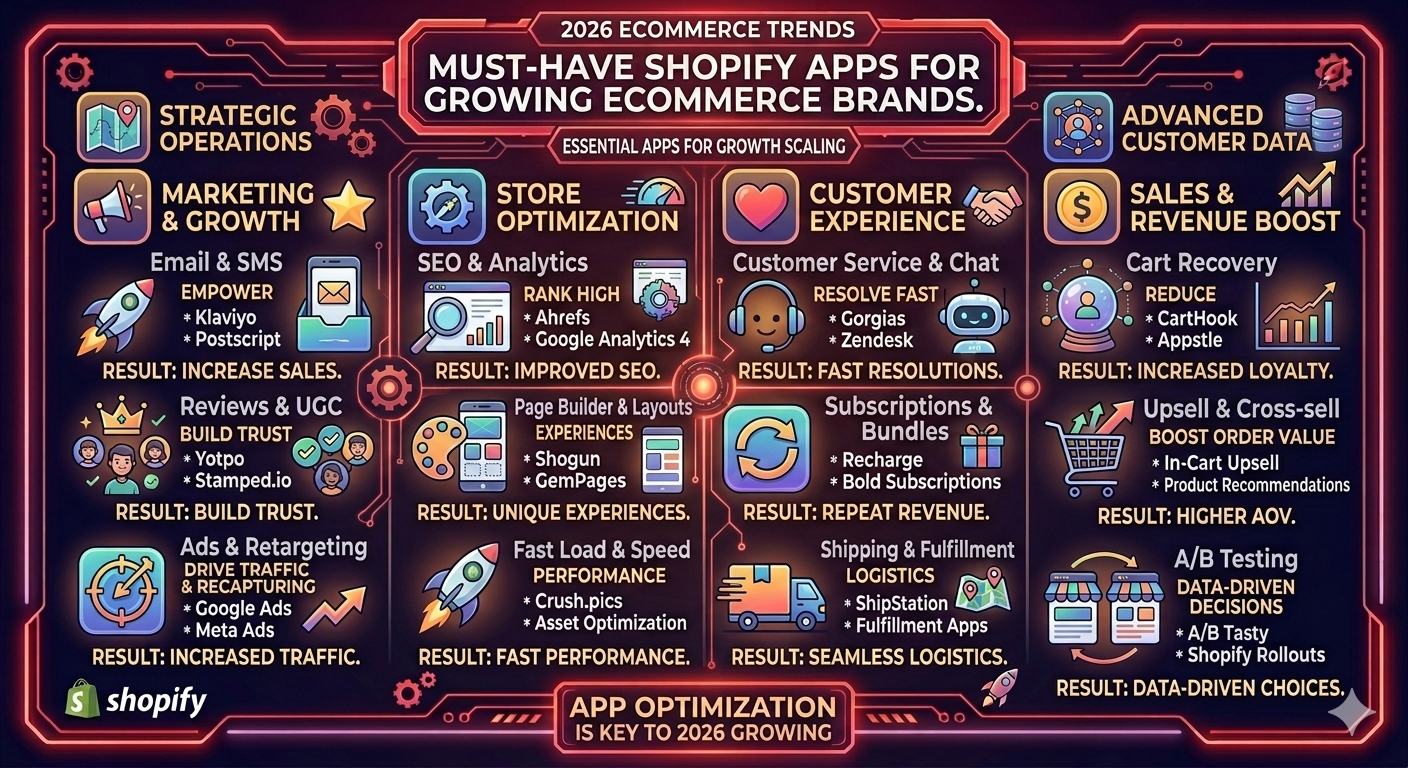
As an eCommerce brand grows, complexity increases across every part of the business. What once worked manually—managing orders, handling customer inquiries, tracking inventory—quickly becomes inefficient and unsustainable. Shopify apps play a critical role in helping growing brands automate processes, improve customer experience, and scale operations without losing control.
However, growth does not come from installing as many apps as possible. In fact, overloading a store with apps often creates performance issues and operational confusion. Sustainable growth comes from choosing the right apps that align with business goals and support long-term scalability.
Why Shopify Apps Are Essential for Growth
Shopify apps extend the platform’s core functionality, allowing brands to add advanced features without building everything from scratch. From marketing automation to order management, apps help businesses operate faster and smarter.
For growing brands, apps reduce manual workload, minimize errors, and maintain consistency across operations. When processes are automated and well-integrated, teams can focus on strategic growth instead of day-to-day firefighting. This operational efficiency directly contributes to higher profitability. One of the biggest mistakes Shopify store owners make is installing apps without considering performance impact. Each app introduces scripts and background processes that can slow down the store over time. A slow store leads to poor user experience, lower conversion rates, and weaker SEO performance. That is why app selection must be intentional. Every app should solve a real problem and deliver measurable value. Fewer, well-optimized apps almost always outperform a store overloaded with unnecessary tools. Customer experience is a major growth driver. Apps that enhance product discovery, communication, and support help customers feel confident and informed. When shoppers can easily find relevant products, read trustworthy reviews, and get timely assistance, they are more likely to complete purchases and return in the future. Improved customer experience leads to stronger brand loyalty and higher lifetime value, both of which are essential for sustainable growth. Marketing becomes more complex as traffic increases. Shopify apps that support email marketing, abandoned cart recovery, and analytics help brands engage customers more effectively. These tools allow businesses to recover lost sales, personalize communication, and optimize campaigns based on real performance data. Instead of relying on guesswork, brands can make informed decisions that improve return on investment and accelerate growth. As order volume grows, operational efficiency becomes critical. Apps that manage inventory, fulfillment, and reporting help businesses scale without losing accuracy or control. Automated systems reduce human error, prevent stock issues, and ensure smooth order processing. Strong operational foundations allow brands to grow confidently without compromising customer experience or internal efficiency.
Zilancer’s Strategic Approach to Shopify Apps
Zilancer’s strategic approach to Shopify apps is rooted in a deep understanding that apps are not just add-ons—they are growth engines that can transform a standard eCommerce store into a high-performing, revenue-generating platform. Rather than blindly installing multiple apps that may slow down a store or create unnecessary complexity, Zilancer follows a highly intentional and performance-driven methodology. Every app decision begins with a clear objective: improving user experience, increasing conversions, automating operations, or enhancing scalability. This goal-first mindset ensures that each app serves a specific business purpose rather than becoming digital clutter.
At the core of Zilancer’s strategy is research and analysis. Before integrating any Shopify app, the team carefully evaluates the store’s current performance, target audience, and business model. They identify gaps in functionality and opportunities where an app can make a measurable difference. For example, if a store struggles with cart abandonment, Zilancer may recommend apps focused on recovery emails, exit-intent popups, or urgency-driven notifications. If the issue is low average order value, they might implement upsell and cross-sell apps strategically placed throughout the customer journey. This tailored approach ensures that every app contributes directly to solving real business challenges.
Another key element of Zilancer’s approach is performance optimization. Many Shopify store owners make the mistake of installing too many apps, which can significantly slow down page load speed and negatively impact SEO and user experience. Zilancer avoids this by selecting lightweight, high-performance apps and minimizing redundancy. In some cases, they even replace multiple apps with a single, more efficient solution or build custom functionality to reduce dependency on third-party tools. This balance between functionality and speed is critical in maintaining a smooth and responsive shopping experience, especially in competitive markets where even a one-second delay can lead to lost sales.
Zilancer also places strong emphasis on seamless integration and design consistency. Apps should not feel like external elements added on top of a store; they should blend naturally with the brand’s identity. The team ensures that every app is customized to match the store’s design, colors, typography, and tone. Whether it’s a review widget, a subscription feature, or a live chat tool, the goal is to create a unified and professional look that builds trust with customers. This attention to detail helps brands maintain a premium feel while leveraging powerful app functionalities.