






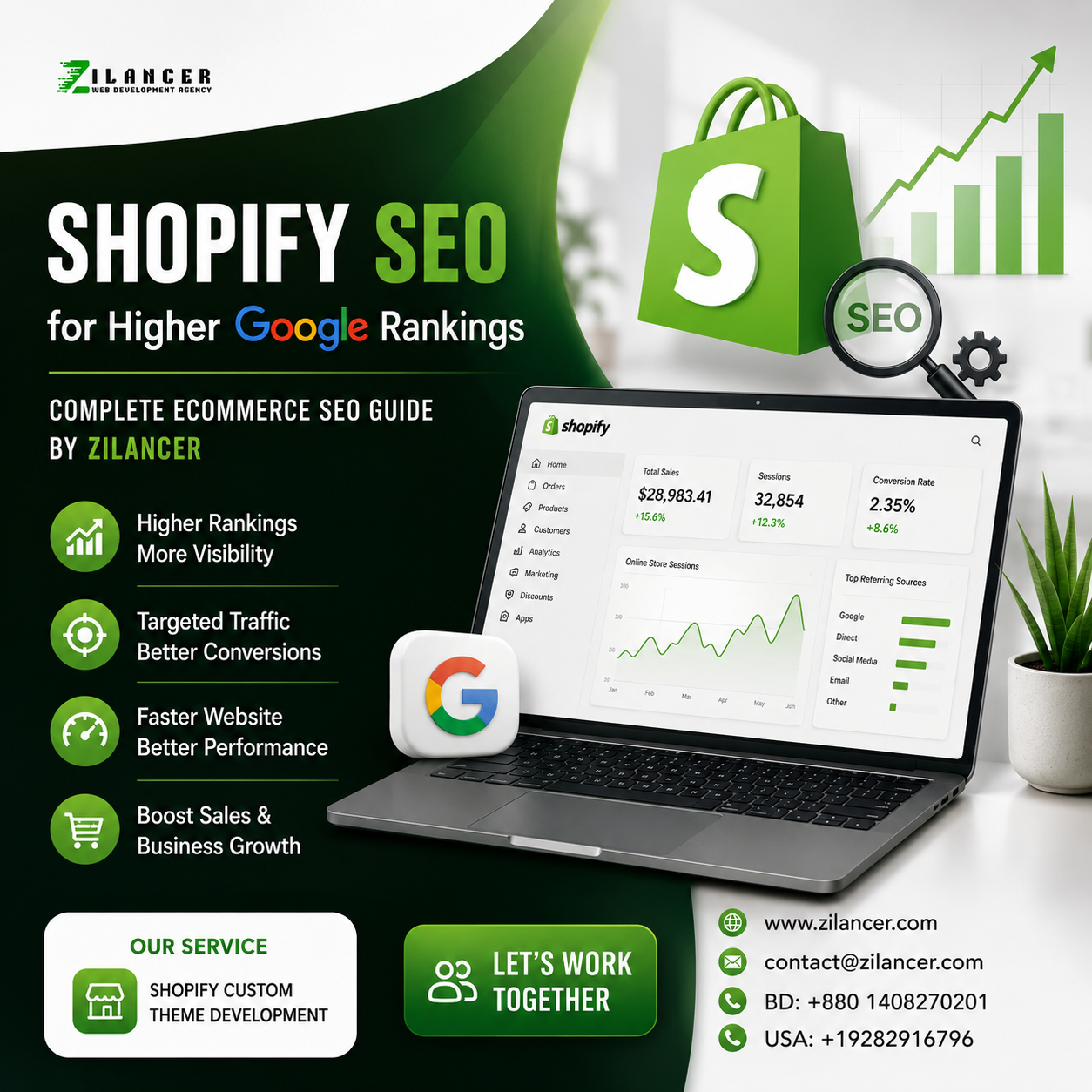
The Shopify eCommerce industry has become more competitive than ever before. Every single day, thousands of new online stores are launched across different industries, making it increasingly difficult for businesses to stand out in search engine results. While Shopify provides a powerful foundation for eCommerce businesses, simply launching a store is not enough to achieve long-term success. If your Shopify website is not properly optimized for search engines, your potential customers may never discover your products, no matter how beautiful your website looks. Google rankings play a critical role in the growth of every Shopify business. Organic traffic remains one of the most valuable traffic sources because it brings highly targeted visitors who are already searching for products and services related to your business. Unlike paid advertising, SEO continues generating traffic over time without requiring continuous ad spending. A well-optimized Shopify store can create sustainable business growth, higher conversion rates, stronger brand authority, and increased profitability.
Many Shopify store owners focus heavily on social media marketing and paid ads while ignoring SEO. However, businesses that invest in search engine optimization often build stronger long-term foundations for success. Shopify SEO is not only about keywords anymore. Modern SEO involves website speed optimization, mobile responsiveness, user experience, technical SEO, content quality, structured data, internal linking, image optimization, and many other important factors. This comprehensive Shopify SEO Checklist will help you understand the essential strategies needed to improve your Google rankings and grow your Shopify store organically. You will also discover how professional Shopify experts at Zilancer help businesses create SEO-focused Shopify stores that drive measurable results.
Why Shopify SEO Matters for eCommerce Growth
In today’s competitive eCommerce industry, having a Shopify store is not enough to guarantee success. Thousands of online stores are launched every single day, and many of them struggle to attract visitors, generate sales, and build long-term customer trust. This is where Shopify SEO becomes one of the most important growth strategies for any online business. Search engine optimization helps your Shopify store appear higher on Google and other search engines, allowing potential customers to discover your products organically without relying completely on paid advertisements. SEO plays a major role in increasing website visibility. Most online shoppers begin their buying journey by searching on Google for products, solutions, or recommendations. If your Shopify store ranks on the first page of search results, you have a much higher chance of getting clicks, traffic, and sales. However, if your website is buried on later pages, your competitors will likely capture those customers before they ever discover your business. One of the biggest advantages of Shopify SEO is long-term organic traffic growth. Paid advertising can generate immediate visitors, but traffic stops the moment you stop spending money. SEO works differently. A properly optimized Shopify store can continue bringing targeted visitors for months or even years. This creates a more sustainable and cost-effective marketing strategy for long-term eCommerce growth.
Shopify SEO also improves customer trust and brand authority. Users naturally trust websites that appear at the top of Google search results because higher rankings are often associated with credibility and quality. When your store ranks well for important keywords, customers are more likely to view your brand as professional and reliable. This trust can significantly improve conversion rates and customer retention. Another reason Shopify SEO matters is because it improves user experience. Modern SEO is not only about keywords anymore. Google now prioritizes websites that load quickly, work smoothly on mobile devices, provide valuable content, and offer easy navigation. Optimizing your Shopify store for SEO often leads to a faster, cleaner, and more user-friendly website experience that benefits both search engines and customers. SEO also helps Shopify businesses target highly relevant audiences. Unlike random traffic, organic visitors usually arrive because they are actively searching for products or services related to your business. This means SEO traffic often converts better because users already have purchase intent. A strong SEO strategy helps attract customers who are more likely to engage with your store and complete purchases.
Content marketing is another powerful benefit connected to Shopify SEO. Publishing valuable blog posts, buying guides, tutorials, and educational content allows your Shopify store to rank for additional keywords and attract more visitors from search engines. High-quality content also strengthens your brand authority while helping customers make informed buying decisions. Technical optimization is equally important for Shopify SEO growth. Factors such as website speed, structured data, mobile responsiveness, internal linking, and image optimization directly affect rankings and user engagement. A technically optimized Shopify store performs better in search results and provides smoother shopping experiences. Professional Shopify agencies like Zilancer understand how to combine advanced SEO strategies with high-converting Shopify design and development. Their expertise helps businesses create SEO-friendly Shopify stores that not only rank higher on Google but also generate better customer engagement and stronger sales performance.
As the eCommerce market continues growing, competition becomes more intense every year. Businesses that invest in Shopify SEO position themselves for sustainable growth, stronger visibility, and higher profitability. SEO is no longer optional for serious Shopify brands. It has become one of the most essential foundations for long-term eCommerce success.
Shopify Website Structure Optimization
Website structure is one of the most important foundations of successful Shopify SEO. No matter how beautiful your Shopify store looks or how good your products are, a poor website structure can negatively affect both user experience and Google rankings. A properly optimized Shopify website structure helps search engines crawl and index your pages efficiently while also making it easier for customers to navigate your store and find products quickly. In the world of eCommerce, user experience and SEO work together closely. When visitors land on your Shopify website, they expect smooth navigation, fast access to collections, and a simple shopping experience. If users become confused or struggle to find products, they are more likely to leave the website immediately. Search engines like Google track user behavior signals such as bounce rate, engagement time, and navigation quality, which means poor structure can directly impact rankings. A strong Shopify website structure begins with clear organization. Your homepage should guide users naturally toward important collections, featured products, and key pages. Categories should be organized logically so customers can move through the website effortlessly. Every product should belong to relevant collections, and navigation menus should remain clean and easy to understand.
One of the biggest mistakes Shopify store owners make is creating complicated navigation systems. Too many menu options, unnecessary categories, and confusing layouts create frustration for users. A simple and organized navigation structure helps both visitors and search engines understand the website hierarchy more effectively. Shopify collection pages play a major role in website structure optimization. Well-optimized collection pages help target broader keywords while grouping related products. For example, instead of only having individual product pages, a clothing store may create collections for men’s fashion, women’s fashion, sneakers, jackets, or accessories. These collections help improve keyword relevance and create stronger internal organization. Internal linking is another critical part of Shopify website structure optimization. Search engines use internal links to discover relationships between pages and distribute ranking authority across the website. Product pages should link naturally to related collections, blog articles, and complementary products. Blog content should also connect strategically to product and category pages. This improves crawlability while encouraging users to spend more time exploring the website.
URL structure is equally important for Shopify SEO. Clean and descriptive URLs improve readability and help search engines understand page content. Short URLs containing relevant keywords often perform better than long and complicated URLs filled with random numbers or unnecessary words. SEO-friendly URLs create a more professional appearance while improving search visibility. Mobile navigation also plays a huge role in modern Shopify website structure optimization. Since most users now browse eCommerce websites using smartphones, mobile navigation must remain smooth and responsive. Menus, filters, and product categories should work perfectly across all devices to ensure positive user experiences. Breadcrumb navigation is another powerful optimization strategy for Shopify stores. Breadcrumbs help users understand their location within the website hierarchy while also improving the internal linking structure. Search engines use breadcrumbs to better interpret site architecture, which can positively influence rankings.
Website structure optimization also improves website scalability. As your Shopify business grows and new products are added, a strong structure allows the store to expand without becoming disorganized. This makes future SEO efforts more effective and manageable over time. Technical SEO benefits significantly from optimized website architecture. Search engines can crawl important pages more efficiently when the structure is clean and logical. Poor structure can lead to indexing issues, orphan pages, duplicate content problems, and weak page authority distribution. Professional Shopify agencies like Zilancer specialize in building SEO-friendly Shopify website structures that improve both rankings and customer experience. Their team focuses on creating clean navigation systems, optimized collections, intelligent internal linking, responsive layouts, and conversion-focused user journeys that help Shopify businesses grow organically.
A properly optimized Shopify website structure is not only about SEO rankings. It directly impacts customer engagement, shopping experience, brand professionalism, and overall conversion rates. Businesses that invest in strong website architecture create better experiences for both search engines and customers, leading to long-term eCommerce success.
Keyword Research for Shopify SEO
Keyword research is one of the most important parts of building a successful Shopify SEO strategy. No matter how well-designed your Shopify store is, it will struggle to attract organic traffic if you are targeting the wrong keywords. Proper keyword research helps you understand exactly what your potential customers are searching for on Google and allows you to optimize your Shopify store around those search terms. When done correctly, keyword research can significantly improve your Google rankings, increase targeted traffic, and boost overall sales performance. In eCommerce SEO, keywords represent customer intent. Every time someone searches on Google, they are looking for information, products, solutions, or recommendations. Understanding these search behaviors helps Shopify store owners create pages that match user intent more accurately. Instead of guessing what customers want, keyword research provides real data about how people search online. One of the biggest mistakes many Shopify store owners make is targeting only broad keywords with extremely high competition. While high-volume keywords may seem attractive, they are often difficult to rank for, especially for newer Shopify stores. This is why long-tail keywords are extremely valuable for eCommerce SEO. Long-tail keywords are more specific search phrases that usually have lower competition but higher conversion potential.
For example, ranking for a broad keyword like “running shoes” may be very difficult because large brands dominate those search results. However, a more targeted keyword, such as “best lightweight running shoes for beginners,” can attract highly interested customers who are much closer to making a purchase decision. These types of keywords often generate better conversion rates because they reflect stronger buying intent. Keyword research also helps Shopify businesses understand different stages of the customer journey. Some users search for informational content while others search with clear purchasing intent. Informational keywords can be targeted through blog content, buying guides, tutorials, and educational articles. Transactional keywords are usually more suitable for product pages and collection pages because they indicate stronger purchase intent. A successful Shopify SEO strategy should include keyword optimization across the entire website. Product pages should target specific product-related keywords naturally within titles, descriptions, meta tags, image alt text, and URLs. Collection pages should target broader category keywords while blog articles should focus on informational search terms that attract additional traffic.
Content clustering is becoming increasingly important in Shopify SEO strategies. Instead of creating isolated pages targeting unrelated keywords, businesses can create groups of related content around core topics. For example, a fitness Shopify store may create blog articles about workout gear, training guides, fitness tips, and nutrition advice while internally linking them together. This helps build topical authority and improves overall search visibility. Local keyword targeting can also benefit Shopify stores that serve specific regions or countries. Geo-targeted keywords help businesses attract customers searching within particular locations. This strategy is especially useful for Shopify brands offering local delivery, regional services, or country-specific products. Voice search optimization is another growing trend influencing keyword research strategies. Many users now search using conversational phrases and questions through mobile devices and smart assistants. Shopify businesses that optimize content for natural conversational keywords can gain additional traffic opportunities.
Professional keyword research requires advanced tools, SEO expertise, and strategic planning. Agencies like Zilancer help Shopify businesses identify high-performing keywords, analyze competitors, optimize content structure, and develop long-term SEO strategies designed to increase organic traffic and conversions. Keyword research is not a one-time process. Search trends, customer behavior, and competition constantly evolve over time. Successful Shopify stores continuously monitor keyword performance, update content strategies, and adapt to changing market conditions. Consistent optimization helps businesses maintain strong rankings and stay ahead of competitors in highly competitive eCommerce industries. A well-planned keyword research strategy creates the foundation for every successful Shopify SEO campaign. By targeting the right keywords, understanding user intent, and creating valuable optimized content, Shopify businesses can attract highly relevant traffic, improve search engine visibility, and build sustainable long-term eCommerce growth.
Why Businesses Choose Zilancer for Shopify SEO
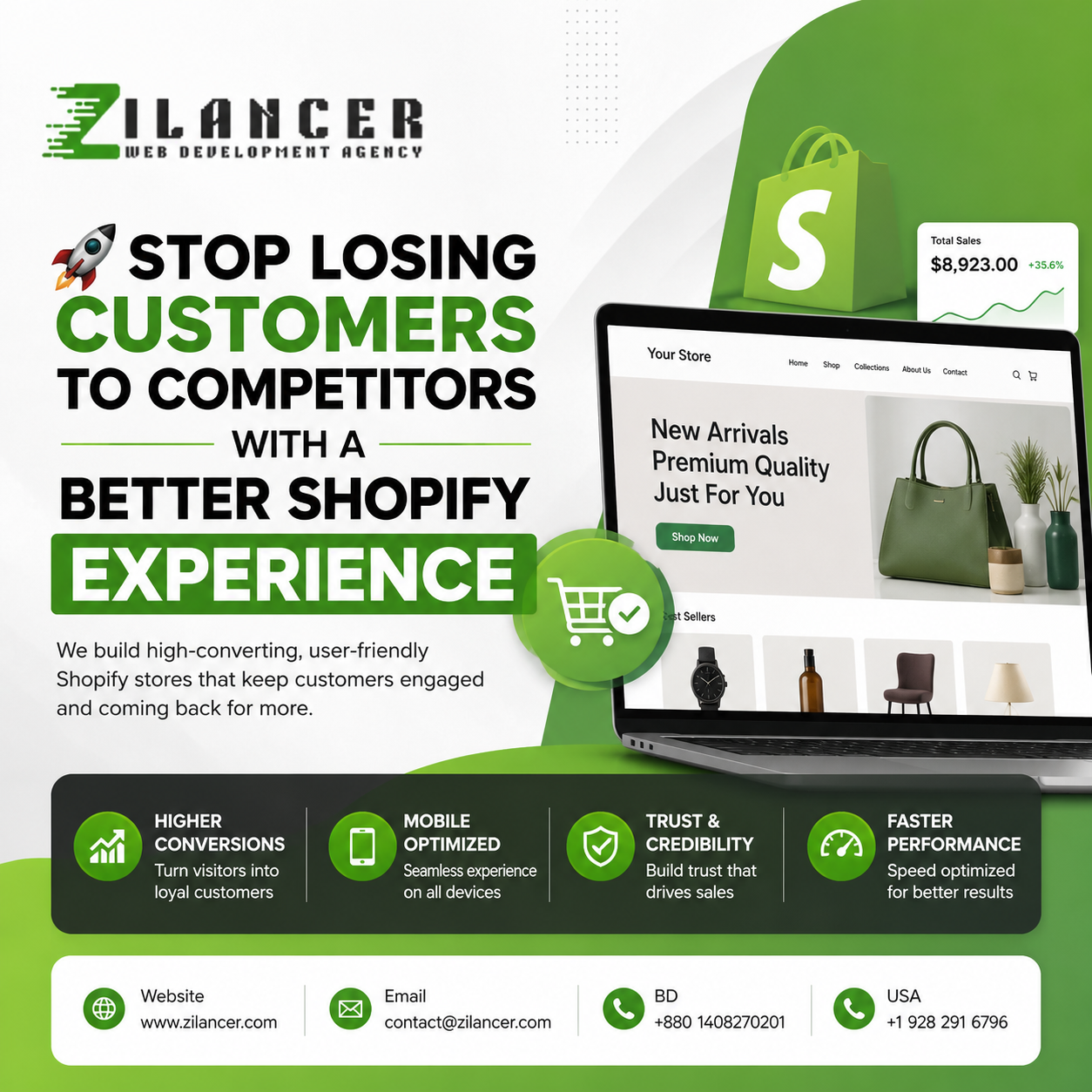
In today’s highly competitive eCommerce market, businesses need more than just a visually attractive Shopify store to succeed online. They need a complete strategy that combines professional design, advanced SEO optimization, fast performance, user-friendly experiences, and conversion-focused development. This is why many brands choose Zilancer for Shopify SEO and eCommerce growth solutions. Shopify SEO has become one of the most important factors for long-term online success. Ranking higher on Google helps businesses attract targeted organic traffic, increase brand visibility, and generate sustainable sales without relying entirely on paid advertising. However, achieving strong rankings requires technical expertise, strategic planning, and deep understanding of both Shopify development and search engine optimization. Zilancer helps businesses bridge that gap by providing complete Shopify SEO solutions designed for real business growth. One of the biggest reasons businesses trust Zilancer is their ability to combine Shopify development expertise with powerful SEO strategies. Many agencies focus only on website design while ignoring technical SEO foundations. Others focus only on SEO without improving user experience or conversion performance. Zilancer approaches Shopify growth from a complete perspective, ensuring that every part of the website works together to improve rankings, customer engagement, and sales performance.
Technical SEO is one of the core strengths of Zilancer. A Shopify website must be properly optimized for search engines to crawl and index pages effectively. Issues such as slow website speed, poor mobile optimization, duplicate content, broken links, and weak website structure can negatively impact rankings. Zilancer helps businesses solve these problems by creating technically optimized Shopify stores that follow modern SEO best practices. Website speed optimization is another major reason businesses choose Zilancer for Shopify SEO. Modern customers expect websites to load quickly, especially on mobile devices. Slow-loading websites increase bounce rates and reduce conversions. Google also considers page speed as an important ranking factor. Zilancer focuses on building lightweight, high-performance Shopify stores that provide smooth user experiences while improving SEO performance. Mobile responsiveness has become essential for every Shopify business. Since most online shoppers browse websites using smartphones, Google now prioritizes mobile-friendly websites through mobile-first indexing. Zilancer creates fully responsive Shopify websites designed to perform seamlessly across desktops, tablets, and mobile devices. This improves both search visibility and customer satisfaction.
Another reason businesses work with Zilancer is their focus on conversion optimization alongside SEO. Generating traffic alone is not enough if visitors do not convert into customers. Zilancer designs Shopify stores with clean layouts, strategic calls-to-action, intuitive navigation, trust-building elements, and optimized product pages that encourage users to complete purchases. This balanced approach helps businesses maximize revenue from their organic traffic. Content optimization also plays a major role in Shopify SEO success. Search engines prioritize websites that provide valuable, relevant, and high-quality content. Zilancer helps businesses optimize product descriptions, collection pages, blog content, metadata, and internal linking structures to improve keyword relevance and search visibility. Their SEO strategies focus not only on rankings but also on creating meaningful user experiences that increase engagement and trust. Custom Shopify development is another important advantage offered by Zilancer. Many Shopify stores rely heavily on generic themes and excessive third-party apps that slow down website performance and limit customization. Zilancer creates custom Shopify solutions tailored to each brand’s specific goals, helping businesses stand out in competitive markets while maintaining strong SEO foundations.
Businesses also appreciate the scalability and long-term growth approach provided by Zilancer. As eCommerce stores grow, websites require continuous optimization, updates, and strategic improvements. Zilancer focuses on building Shopify stores that can scale efficiently over time while maintaining performance, usability, and search engine visibility. Transparency and professional communication are additional reasons why many businesses choose Zilancer for Shopify SEO services. Successful SEO requires ongoing collaboration, analysis, and optimization. Zilancer works closely with clients to understand their business goals, industry competition, target audience, and long-term vision before implementing strategic SEO solutions. The eCommerce industry changes rapidly, and search engine algorithms continue evolving every year. Businesses need Shopify experts who stay updated with modern SEO trends, Core Web Vitals, AI-driven search updates, mobile optimization standards, and conversion-focused design strategies. Zilancer continuously adapts to industry changes to help businesses remain competitive in search rankings and online sales growth. Whether a business is launching a brand-new Shopify store or improving an existing one, Zilancer provides complete Shopify SEO and development solutions designed to support long-term success. Their combination of technical expertise, creative design, SEO knowledge, and growth-focused strategy makes them a trusted partner for businesses looking to increase visibility, traffic, and eCommerce revenue.