







In the fast-moving world of e-commerce, standing still often means falling behind. A Shopify store that performed exceptionally well two or three years ago may no longer meet modern customer expectations. Design standards evolve, user behavior changes, and technology advances rapidly. What once felt fresh and innovative can slowly start to feel outdated and inefficient. A Shopify store redesign is not just about visual improvements. It is about optimizing performance, enhancing user experience, and aligning your store with your current business goals. When done strategically, a redesign can unlock higher conversions, stronger branding, and long-term scalability. At Zilancer, we often see brands hesitate because they fear losing traffic or disrupting existing customers. However, with proper planning and data-driven decisions, a redesign becomes an opportunity for growth rather than a risk.
When Is the Right Time to Redesign Your Shopify Store?
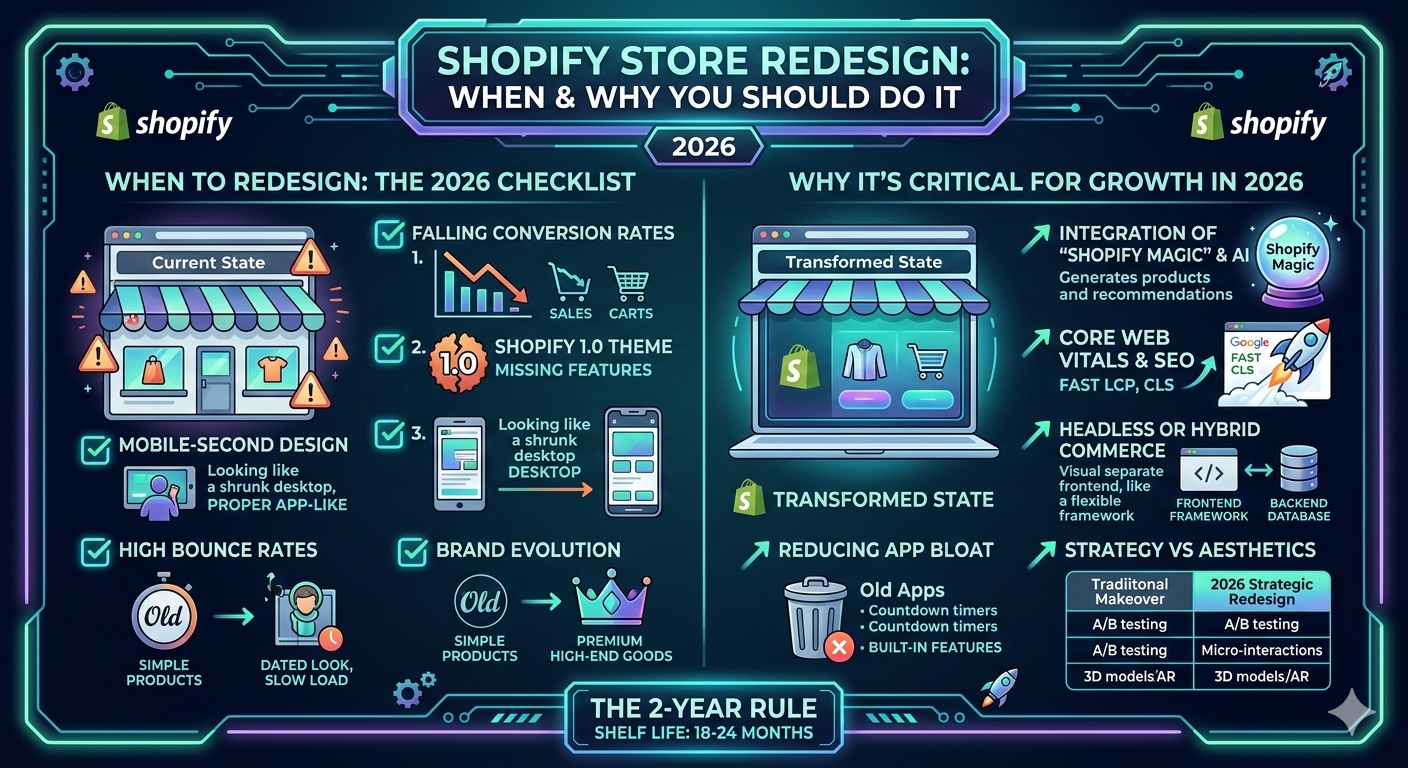
One of the clearest signals that your store needs a redesign is declining conversion rates. If your marketing campaigns are still bringing traffic but sales are dropping, the issue often lies within the user experience. Complicated navigation, outdated layouts, poor mobile responsiveness, or slow loading speed can silently damage your revenue. Another major indicator is brand evolution. As businesses grow, their identity, messaging, and target audience often shift. A store designed during your startup phase may not reflect your current market position. If your branding feels inconsistent or your website no longer communicates your value clearly, it may be time for a redesign. Your store should represent who you are today — not who you were when you first launched. Technology also plays a significant role. Shopify continuously introduces new features, performance improvements, and integrations. Older themes may lack modern speed optimization, advanced filtering systems, or mobile-first design principles. If your store is built on outdated technology, you may be missing opportunities to improve user engagement and efficiency. Customer behavior is another important factor. Online shoppers now expect seamless browsing, fast checkouts, personalized experiences, and clear product presentation. If your store does not meet these expectations, customers will quickly move to competitors. A well-executed redesign focuses on eliminating friction throughout the customer journey. Every step — from landing on the homepage to completing checkout — should feel intuitive and effortless. When users can find products quickly, understand their benefits clearly, and navigate without confusion, conversions naturally increase. Improved navigation is often one of the biggest performance boosters. Simplified menus, logical category structures, and advanced search functionality make it easier for customers to explore your store. Clear calls-to-action guide them toward purchases without hesitation. Product presentation also plays a crucial role. High-quality images, structured descriptions, benefit-focused copy, and trust-building elements such as reviews or guarantees enhance credibility. A redesign allows you to refine these elements for maximum impact. Performance optimization is another key advantage. Modern design practices prioritize speed and clean code. Faster loading times reduce bounce rates and improve both user experience and SEO rankings. Since Google values speed and mobile usability, redesigning your Shopify store can also strengthen your organic search performance.
Redesign Without Losing Traffic or Customers
One of the biggest concerns business owners have is losing SEO rankings during a redesign. This fear is understandable — but manageable. A strategic redesign preserves URL structures, metadata, and high-performing content while improving overall layout and usability. Before starting a redesign, it is essential to analyze existing data. Identifying top-performing pages, high-converting products, and strong traffic sources ensures that valuable assets remain protected. Redirects should be handled carefully to prevent broken links or ranking losses. Communication is also important. Gradual improvements and consistent branding help existing customers adapt easily. Rather than introducing sudden dramatic changes, a thoughtful redesign focuses on evolution — enhancing what works while fixing what does not. At Zilancer, we prioritize performance-first redesign strategies. Our approach balances aesthetics, functionality, and SEO stability to ensure smooth transitions with measurable growth results. A Shopify store redesign should never be viewed as a simple cosmetic update. It is a strategic investment in your brand’s future. As your marketing efforts scale and traffic increases, your store must be ready to convert visitors efficiently. A redesigned store improves advertising efficiency because a better user experience increases return on ad spend. It strengthens brand perception, making your business appear more professional and trustworthy. It also creates a scalable structure that supports product expansion, new campaigns, and future growth initiatives. Most importantly, a redesign helps your store stay competitive. In e-commerce, first impressions matter. A modern, fast, and user-friendly Shopify store builds confidence instantly. Knowing when to redesign your Shopify store is just as important as knowing how to do it. Declining conversions, outdated branding, poor performance, or evolving business goals are clear signs that change is necessary. When executed strategically, a Shopify store redesign enhances user experience, protects SEO performance, improves conversion rates, and prepares your business for scalable growth.
At Zilancer, we believe redesign is not about changing everything — it is about refining, optimizing, and building a stronger foundation for long-term success.