





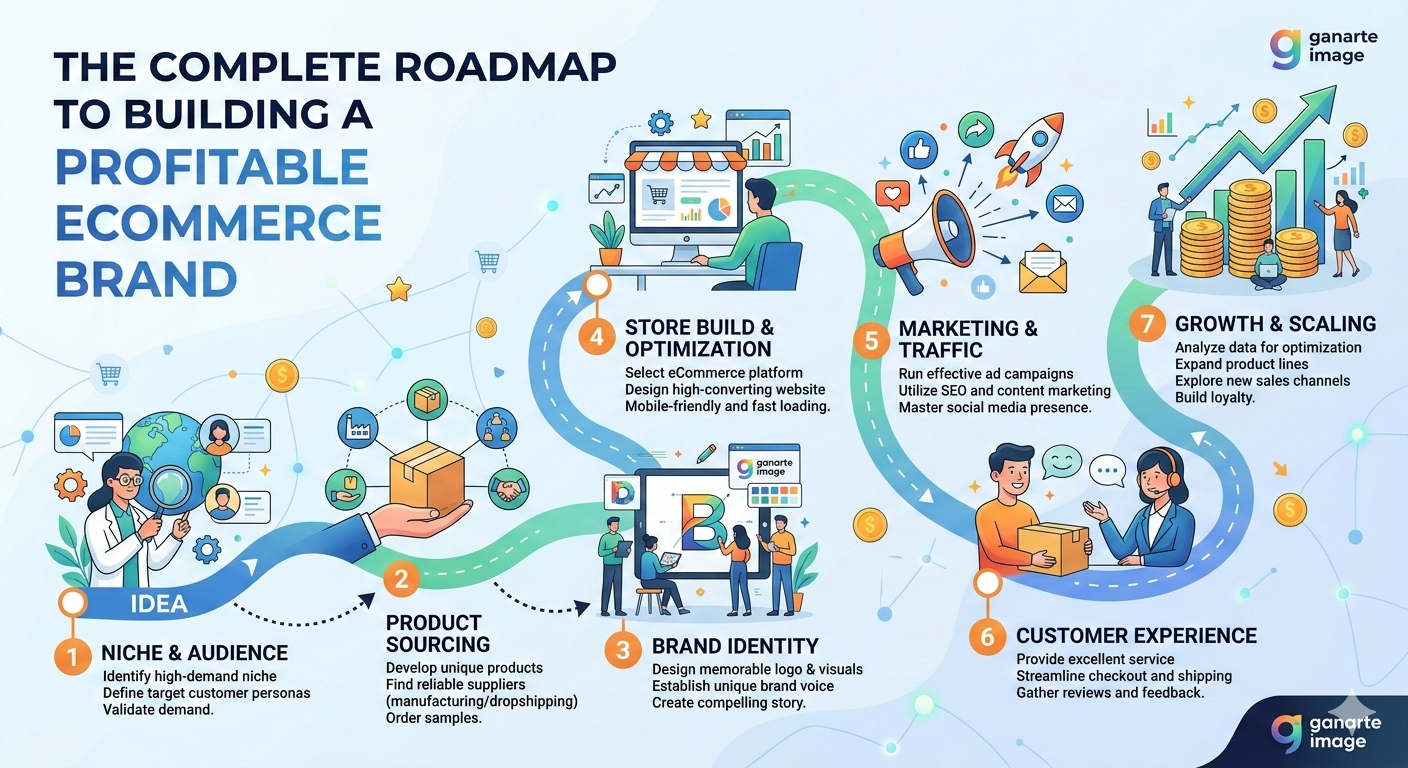
Building a profitable eCommerce brand is not about launching a website and waiting for orders to appear. It is a structured, strategic process that requires clarity, disciplined execution, and continuous optimization. Many businesses enter the online market with excitement but without a clear roadmap. As a result, they waste time, overspend on marketing, and struggle to achieve consistent profitability.
True eCommerce success comes from building a strong foundation, creating a conversion-focused store, attracting the right audience, and scaling with systems that support long-term growth.
At Zilancer, we work with brands at different stages — from early startups to scaling businesses — and one pattern is always clear: brands that follow a structured growth roadmap consistently outperform those relying on trial and error.
Laying the Right Foundation
Every profitable eCommerce brand begins with clarity. Before design, advertising, or product launches, you must understand three core elements: your target audience, your value proposition, and your positioning. Who exactly are you selling to? What specific problem does your product solve? Why should customers choose your brand over competitors? Without clear answers to these questions, marketing becomes unfocused, and conversions suffer. A strong foundation ensures that every decision — from branding to pricing — aligns with a defined strategy. Choosing the right platform is also critical. Scalable systems like Shopify provide the flexibility and performance needed to grow without technical limitations. Early structural decisions around store architecture, navigation, and performance optimization directly impact long-term profitability. A weak foundation creates ongoing friction. A strong foundation creates momentum. Traffic alone does not create profit — conversions do. A beautifully designed website is meaningless if visitors do not complete purchases. That is why successful eCommerce brands prioritize user experience from day one.
A high-converting store focuses on:
-
Clear messaging that communicates value instantly
-
Simple navigation that reduces confusion
-
Strong product pages with persuasive copy and trust signals
-
Fast loading speed across all devices
-
Mobile-first design for modern shoppers
Your store should guide customers naturally from the landing page to the product page and finally to checkout. Every click should feel intuitive. Every step should reduce friction.
Trust-building elements such as customer reviews, clear return policies, secure payment options, and professional branding increase confidence. When customers feel secure, conversion rates improve.
This stage often creates the biggest difference between average brands and truly profitable ones.
Driving the Right Kind of Traffic
Not all website traffic is equal. Profitable brands focus on attracting visitors who are ready or close to ready to buy.
Traffic generation should combine multiple channels strategically:
-
Paid advertising for fast visibility
-
Search engine optimization for long-term organic growth
-
Content marketing to build authority and trust
-
Social media to engage and nurture audiences
Instead of chasing vanity metrics like impressions or clicks, smart brands track metrics that matter: cost per acquisition, conversion rate, and return on ad spend.
Testing becomes essential at this stage. Campaign creatives, targeting audiences, landing pages, and offers must be continuously optimized based on performance data.
The goal is not just more traffic — it is more profitable traffic.
Conversion Rate Optimization (CRO)
Conversion Rate Optimization (CRO) is a strategic process focused on increasing the percentage of website visitors who take a desired action, such as making a purchase, signing up, or filling out a form. Rather than simply driving more traffic, CRO emphasizes making the most of existing visitors by improving their overall experience and guiding them toward conversion. It involves analyzing user behavior, identifying friction points, and making data-driven improvements across key touchpoints like landing pages, product pages, and checkout flows. Elements such as clear call-to-action buttons, fast loading speed, mobile responsiveness, trust signals, and persuasive content all play a crucial role in influencing user decisions.
A successful CRO strategy is built on continuous testing and optimization. Techniques like A/B testing allow businesses to compare different versions of a page to determine what performs best. Small changes—such as adjusting headlines, button colors, product images, or page layouts—can lead to significant improvements in conversion rates. Additionally, understanding customer psychology is essential; factors like urgency, social proof, and simplicity can strongly impact purchasing behavior. By combining analytics with user-centric design, CRO helps create a seamless and engaging journey that not only boosts conversions but also enhances customer satisfaction and long-term brand loyalty.
At Zilancer, we help brands navigate this roadmap with clarity, strategic execution, and performance-driven solutions — transforming ideas into sustainable, profitable eCommerce businesses.