






Shopify has become one of the most powerful eCommerce platforms in the world. Thousands of businesses launch Shopify stores every single day with the dream of building a successful online brand. The platform is simple, scalable, and packed with incredible features that allow store owners to sell products globally. However, many Shopify stores struggle to generate consistent traffic even after investing heavily in products, branding, and marketing campaigns. The problem is not always the products. It is not always the advertisements, either. In many cases, the real issue is a poor SEO strategy combined with critical optimization mistakes that silently damage search visibility. These SEO mistakes reduce rankings, hurt user experience, slow down website performance, and prevent search engines from understanding the true value of your online store.
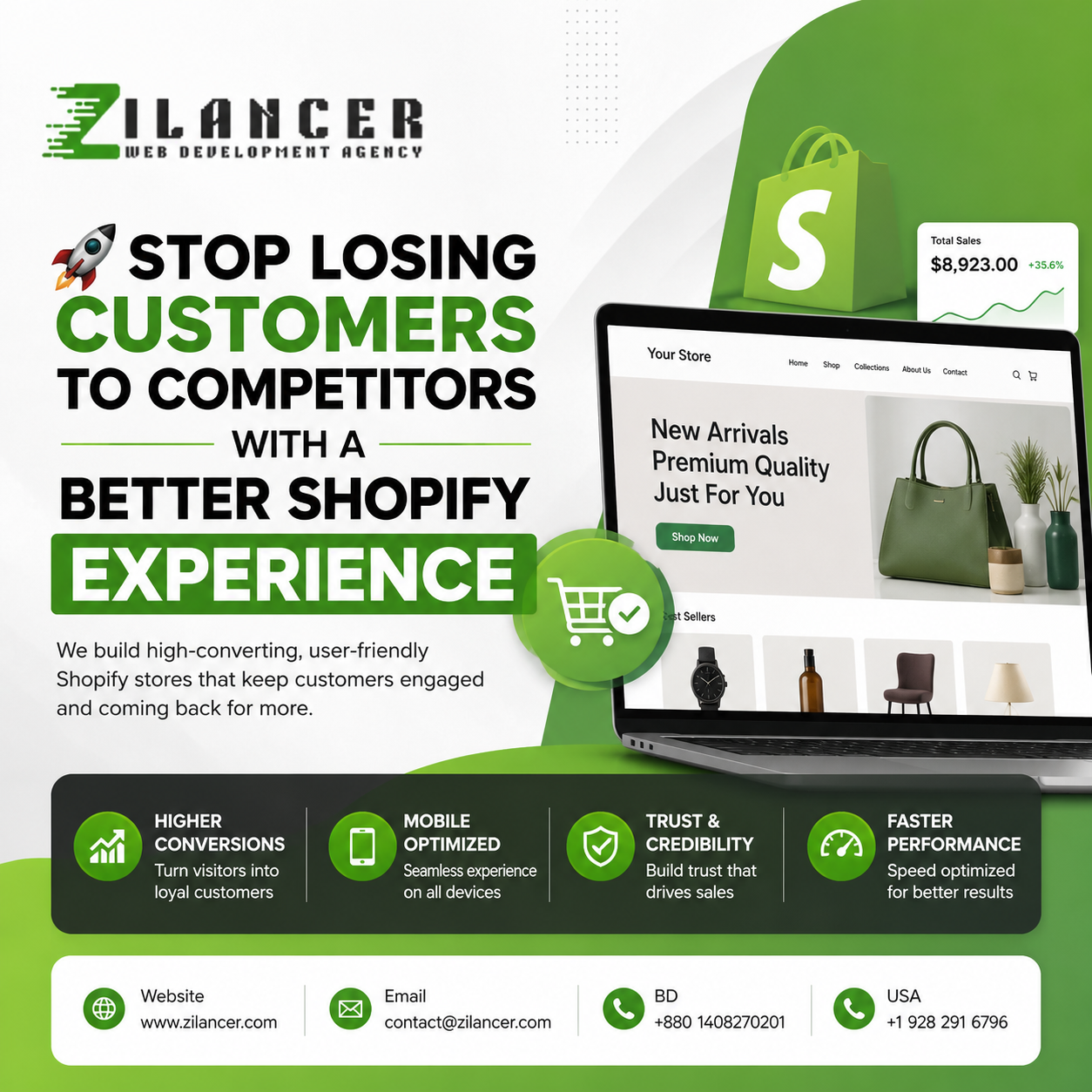
Many store owners focus only on social media marketing while completely ignoring organic search traffic. This creates a dangerous long-term dependency on paid advertising. The moment advertising budgets stop, traffic disappears. SEO works differently. A properly optimized Shopify store can generate targeted traffic consistently for months and years without relying entirely on paid campaigns. At Zilancer, we work closely with Shopify businesses to identify hidden SEO problems and transform underperforming stores into fast, optimized, conversion-focused eCommerce brands. Our goal is not only to improve rankings but also to create Shopify experiences that attract customers, build trust, and increase sales naturally.
In this complete guide, we will explore the biggest Shopify SEO mistakes that are killing your traffic and explain how to fix them correctly.
Ignoring Technical SEO Problems
One of the biggest reasons Shopify stores fail to rank properly is poor technical SEO. Many business owners focus only on adding products and publishing content while completely ignoring the technical foundation of the website. Search engines rely heavily on technical signals to understand and rank a website effectively. If your store has broken pages, crawl errors, duplicate URLs, indexing problems, or poor site architecture, search engines may struggle to understand your content. Even if your products are excellent, technical SEO issues can prevent your pages from appearing in search results. A slow-loading website is another major technical issue. Shopify stores filled with heavy images, unoptimized apps, unnecessary scripts, and bloated themes often experience extremely poor loading speeds. Search engines prioritize websites that offer fast and smooth user experiences. When pages take too long to load, users leave quickly, increasing bounce rates and reducing rankings.
At Zilancer, we optimize Shopify stores by improving site speed, fixing technical SEO errors, reducing unnecessary code, optimizing scripts, and creating clean structures that help search engines crawl pages efficiently. Your Shopify theme directly affects SEO performance. Many store owners choose themes based only on visual appearance without considering performance, mobile responsiveness, or SEO structure. Some themes contain excessive code, poor heading structures, unnecessary animations, and heavy design elements that slow down the store dramatically. A visually attractive store means nothing if users leave before the page finishes loading. Google values user experience heavily. If visitors struggle to navigate your store, search engines notice those negative engagement signals. A poorly designed theme can damage rankings, reduce conversion rates, and increase bounce rates. A professional Shopify theme should be clean, lightweight, responsive, and optimized for conversions. It should guide visitors naturally through the buying journey while maintaining excellent performance across all devices.
At Zilancer, we create custom Shopify experiences that combine beautiful design with advanced SEO optimization. Our Shopify stores are built to load fast, perform smoothly, and help businesses grow organically. Many Shopify store owners make the mistake of uploading products with weak descriptions, generic titles, and missing SEO elements. Product pages are one of the most important ranking opportunities in eCommerce SEO. Search engines need detailed information to understand your products correctly. Thin product descriptions copied from suppliers create duplicate content issues and provide no unique value. This makes it extremely difficult to compete in search results.
A strong product page should include optimized titles, keyword-rich descriptions, proper headings, image optimization, internal links, structured data, and compelling content that helps users make buying decisions. Many successful Shopify stores also include FAQs, reviews, trust signals, sizing information, and educational content directly on product pages. These elements improve engagement and increase the likelihood of conversions. At Zilancer, we help businesses create SEO-focused product pages that are designed not only for search engines but also for customer trust and conversions.
Ignoring Keyword Research
One of the most common Shopify SEO mistakes is targeting the wrong keywords or failing to conduct keyword research entirely. Many store owners simply guess what customers are searching for instead of using real search data. Without proper keyword research, your content may target phrases that have no traffic potential or are too competitive to rank for. SEO success begins with understanding user intent and identifying the exact terms customers use while searching online. Effective keyword research allows businesses to discover high-intent search opportunities, long-tail keywords, buyer-focused phrases, and niche-specific terms that can drive highly targeted traffic. For example, ranking for broad keywords like “shoes” is extremely difficult. However, targeting long-tail phrases such as “comfortable waterproof hiking shoes for women” can bring more qualified traffic with higher conversion potential.
At Zilancer, we develop data-driven Shopify SEO strategies based on real keyword opportunities that align with your products, audience, and business goals. Content quality plays a major role in Shopify SEO success. Many eCommerce websites publish extremely short blog posts, duplicate descriptions, or low-value content that provides little benefit to readers. Google prioritizes helpful, informative, and trustworthy content. Thin content fails to establish authority and rarely performs well in competitive search results. High-quality Shopify content should educate users, solve problems, answer questions, and build trust naturally. A well-written blog strategy can drive massive amounts of organic traffic while positioning your brand as an industry authority. Content marketing also creates opportunities for internal linking, keyword targeting, backlink generation, and customer engagement. Shopify stores that consistently publish valuable content often experience significant long-term SEO growth. At Zilancer, we create professional Shopify SEO content designed to improve rankings, attract targeted traffic, and increase customer trust. Mobile optimization is no longer optional. The majority of eCommerce traffic now comes from smartphones and tablets. If your Shopify store does not perform properly on mobile devices, you are losing both rankings and customers. Many Shopify stores look good on desktop but become difficult to use on smaller screens. Tiny buttons, broken layouts, overlapping elements, slow loading speeds, and confusing navigation create frustrating experiences for mobile users.
Google uses mobile-first indexing, meaning the mobile version of your store is extremely important for SEO. Poor mobile experiences can severely impact rankings and conversions.
At Zilancer, we design Shopify stores that are fully responsive, mobile-optimized, and built to deliver seamless shopping experiences across all devices.
Not Using Proper Heading Structures
One of the most overlooked Shopify SEO mistakes is failing to use proper heading structures throughout the website. Many store owners focus heavily on visuals, products, and design elements while ignoring how their content is organized for both users and search engines. A poorly structured page makes it difficult for search engines to understand the importance of your content, which can negatively affect rankings and organic visibility. Headings play a critical role in SEO because they create a clear hierarchy of information across a webpage. The H1 heading should represent the primary topic of the page, while H2 and H3 headings should organize supporting sections logically. When headings are used correctly, search engines can better understand what your content is about and how different sections relate to one another. Unfortunately, many Shopify stores misuse headings by placing multiple H1 tags on the same page, skipping heading levels, or using headings purely for styling purposes instead of structure. Some store owners even replace important headings with images or decorative text, which makes it harder for search engines to crawl and interpret the content properly.
A clean heading structure also improves user experience significantly. Visitors should be able to scan your content easily and understand the flow of information without confusion. Well-organized content keeps users engaged longer, reduces bounce rates, and increases the chances of conversion. When visitors can quickly find answers to their questions, they are more likely to trust your brand and continue exploring your Shopify store. Proper heading structures are especially important for long-form Shopify SEO content, product pages, collection pages, and blog articles. Each section should guide users naturally while supporting your target keywords in a meaningful and readable way. Search engines reward websites that provide clear, structured, and user-friendly experiences. At Zilancer, we build Shopify stores with professionally optimized heading structures designed to improve SEO performance, readability, and customer engagement. Our team ensures every page follows modern SEO best practices while maintaining a clean and conversion-focused design experience for your visitors. Images are essential for eCommerce stores, but poorly optimized images can destroy website performance. Large image files slow down loading speeds and negatively impact SEO. Many Shopify store owners upload massive image files without compression, alt text, or optimization. This creates poor user experiences and reduces search visibility. Image optimization includes compressing files, using proper formats, adding descriptive alt text, and implementing responsive image delivery. Optimized images help pages load faster while improving accessibility and SEO performance.
At Zilancer, we optimize Shopify images carefully to improve performance without sacrificing visual quality.
How Zilancer Helps Shopify Businesses Grow
Building a successful Shopify business requires far more than simply launching a store and adding products. In today’s competitive eCommerce industry, brands need a powerful combination of professional design, advanced SEO optimization, fast website performance, mobile responsiveness, and conversion-focused user experiences to stand out from the competition. Many Shopify store owners struggle to achieve consistent growth because their websites are not properly optimized for traffic, engagement, and sales. At Zilancer, we help Shopify businesses grow by creating modern, high-performing eCommerce solutions tailored specifically for long-term success. Our goal is not only to build visually attractive Shopify stores but also to create websites that generate traffic, improve customer trust, and increase conversions naturally. One of the biggest ways we help Shopify businesses grow is through advanced Shopify SEO optimization. Organic traffic is one of the most valuable sources of long-term growth because it allows businesses to attract customers directly from search engines without depending entirely on paid advertising. Our team focuses on improving technical SEO, optimizing store structures, enhancing keyword targeting, fixing indexing problems, improving page speed, and creating search-engine-friendly content strategies that help Shopify stores rank higher in competitive search results.
Website performance is another critical factor in Shopify success. Slow-loading stores often lose customers within seconds, especially on mobile devices. At Zilancer, we optimize Shopify websites for speed and performance by reducing unnecessary code, optimizing images, improving theme efficiency, and eliminating issues that negatively affect user experience. Faster websites not only improve SEO rankings but also increase customer satisfaction and conversion rates. We also specialize in custom Shopify theme development designed specifically around each brand’s goals and audience. Instead of relying on generic designs, we create unique Shopify experiences that reflect the identity of the business while maintaining a clean, modern, and professional appearance. Every design decision is made with both user experience and conversion optimization in mind. Mobile optimization plays a major role in modern eCommerce growth. Since a large percentage of Shopify traffic comes from smartphones and tablets, every store we build is fully responsive and optimized for seamless mobile browsing. We ensure that customers can navigate products, collections, and checkout pages smoothly across all devices.
Another important part of Shopify growth is conversion optimization. Many stores receive traffic but fail to convert visitors into customers because of poor layouts, weak trust signals, confusing navigation, or ineffective product presentation. At Zilancer, we focus on improving customer journeys by creating user-friendly layouts, professional product pages, optimized call-to-actions, and trust-building elements that encourage visitors to make purchasing decisions confidently. Content strategy is also essential for long-term Shopify growth. High-quality content helps businesses build authority, improve search rankings, and connect with customers more effectively. Our team helps Shopify brands create SEO-friendly content that not only attracts organic traffic but also strengthens brand credibility within their industry. At Zilancer, we understand that every Shopify business is different. That is why we develop customized strategies tailored to the specific goals, audience, products, and growth plans of each client. Whether you are launching a brand-new Shopify store or scaling an existing business, we focus on delivering scalable solutions designed to support long-term eCommerce success.
Our mission is to help Shopify brands create stronger online presences, improve visibility, increase customer engagement, and generate sustainable growth through professional Shopify development and SEO-focused strategies.